
Planning a trip to Colombia and don’t know what to expect? I promise that it won’t disappoint you to visit Colombia for the first time. And don’t worry, I’ve got you covered. Here I share with you some insider travel tips that you should know before traveling to Colombia.
I don’t mean to sound like an advertisement from Colombia’s department of tourism, but with its rainforests, wildlife, pristine islands, pueblos (small towns), and big cities- it has something for everyone. But it is not just these places that make Colombia so popular with the tourists, it’s the warmth and friendly attitude of Colombians who make it such a wonderful experience.
While I lived in Bogota for most of the time owing to my job teaching English with a Colombia work visa, I traveled to many parts of the country including the coast and many small towns. In this guide, I will cover everything you need to know before going to Colombia. Reading this will make your journey simpler, more comfortable and definitely more enjoyable.
Visas for your trip to Colombia
If you are from a visa-exempt country such as the United States, Canada, E.U., Australia, then you can enter without any tourist visa and receive an entry stamp with the number of days you can stay at the immigration. Usually, that would be 90 days. Before the 90 days are over, here is how to extend Colombia tourist visa for 90 more days. But citizens from most countries in Asia and Africa need a visa. Here is how to get a 180-day tourist visa for Colombia.
Traveling to Colombia: 10 Best Things to Do in Colombia
It’s not an easy job to pick 10 best things to do in a country with so many possibilities. In a way, it’s like limiting yourself. However, if you are short on time and you need to plan, here are the things I would highly recommend.
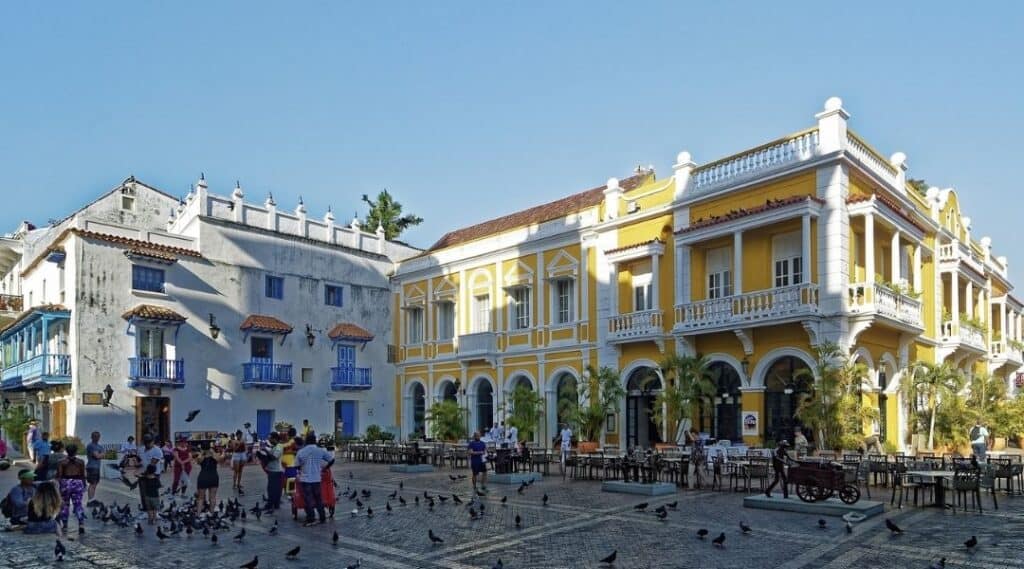
Wander through the streets of Old Town Cartagena
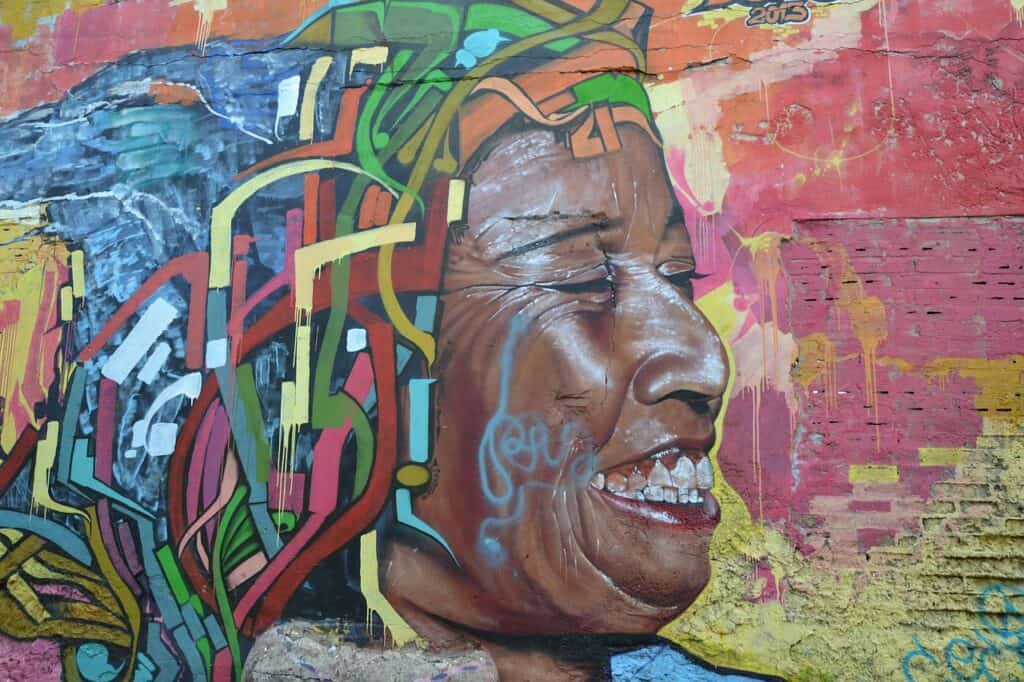
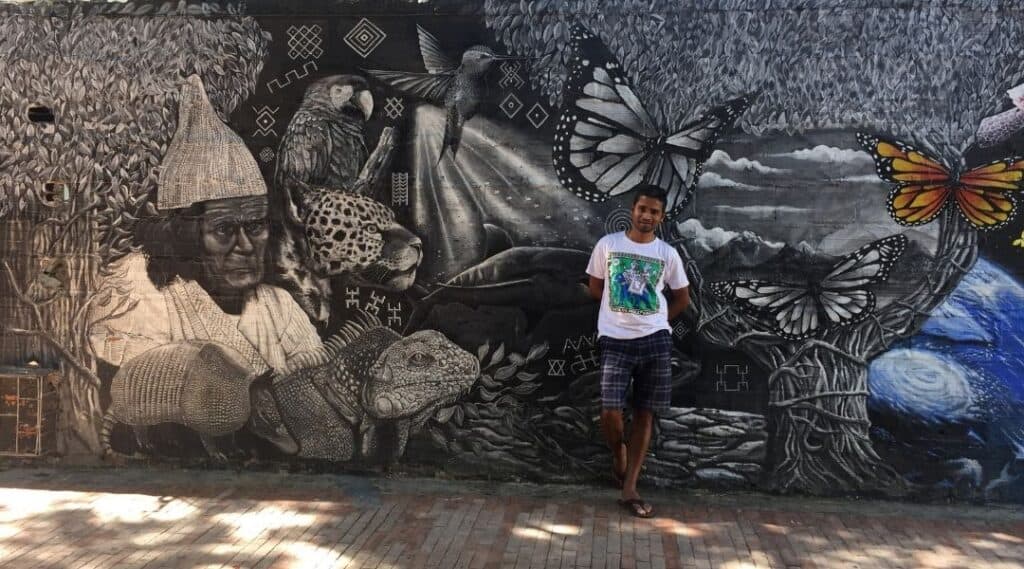
This second-oldest city of Colombia was an important trading center for centuries during the Colonial era. You could stroll down the labyrinth of streets flush with old colonial homes punctuated by churches and grand plazas within the old walls. Take a short walk over to the Getsemani neighborhood, to discover some vibrant street art.
And whenever you are tired, indulge your taste buds with a myriad of tropical fruits being sold on the streets from Palenqueras, Colombian women dressed in bright costumes, balancing bowls of fruit atop their heads. And when you are there, don’t miss Santa Marta, a beach-side town four hours away with such a good vibe, beautiful beaches and much less tourists.
Tour the Coffee Country
Trailing Brazil and Vietnam, Colombia is the world’s third-largest coffee producer. Coffee is a big part of the Colombian culture. So if you are a coffee enthusiast ( or can become one), head out to a town like Armenia, Pereira, Manizales or Ibagué in the coffee region. Or maybe to a small town like Salento. Visit a plantation and learn the whole coffee process starting from planting a bush, harvesting coffee berries, removing the pulp, drying the beans, and finishing them with a roast.
Trek in the Cocora Valley
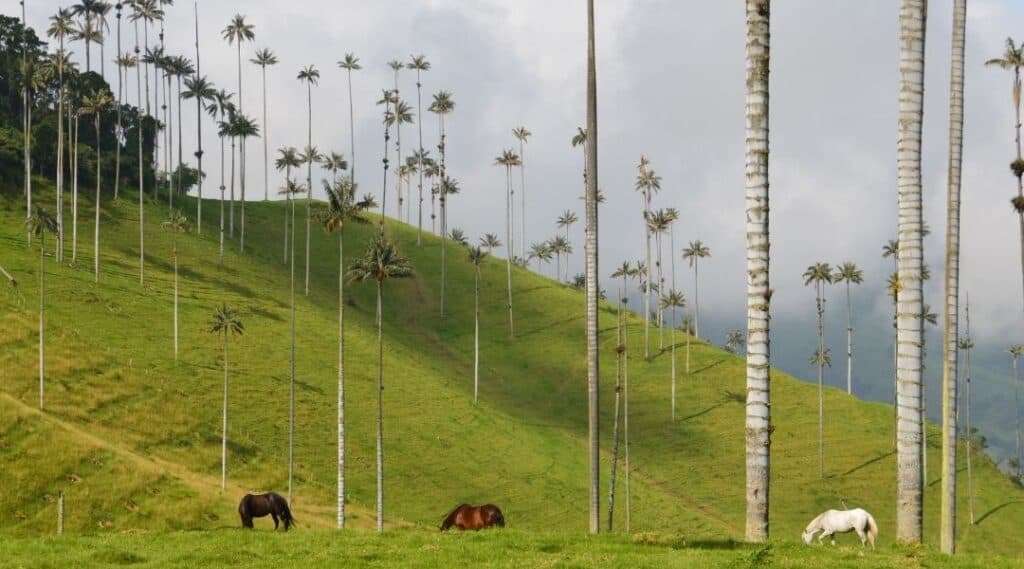
Home to the protected Quindío wax palm, Cocora valley is a cloud forest with these unique and towering trees that can grow up to 68 meters. It is part of the larger Los Nevados National Natural Park. So if you are planning to go see these surreal trees, why not camp out and go for some hikes and rafting and bird watching?
Swim at Tayrona National Park
Far removed from the hustle and bustle of heavily touristic places, Tayrona national park is a postcard-perfect location of pristine beaches, the lapping waves, and the turquoise water. Going there involves a trek through a tropical forest bordering the Caribbean sea, where you might find monkeys — red howlers, capuchins, and titis. While you can take a horse, I would highly recommend doing the trek.
Get a Mud Bath in Totumo Volcano
Not sure about your idea of fun, but for some reason, floating atop a 2300m deep “mud volcano” with a bunch of strangers does sound like fun to me.
Add to that a mud massage for USD1.50. So in case, you are in Cartagena, why not plan a day tour to Totumo volcano?
Dance Salsa in Cali
A big part of traveling is about letting go of yourself and partake in something new, something unknown. So even if you know you are a terrible dancer and everyone is watching you, go to Cali, the capital of Salsa in the world. And when you are not bar hopping or grooving to the Salsa music, make sure you visit the landmarks like Iglesia la Ermita and Cristo Rey.
Attend at least one Carnaval
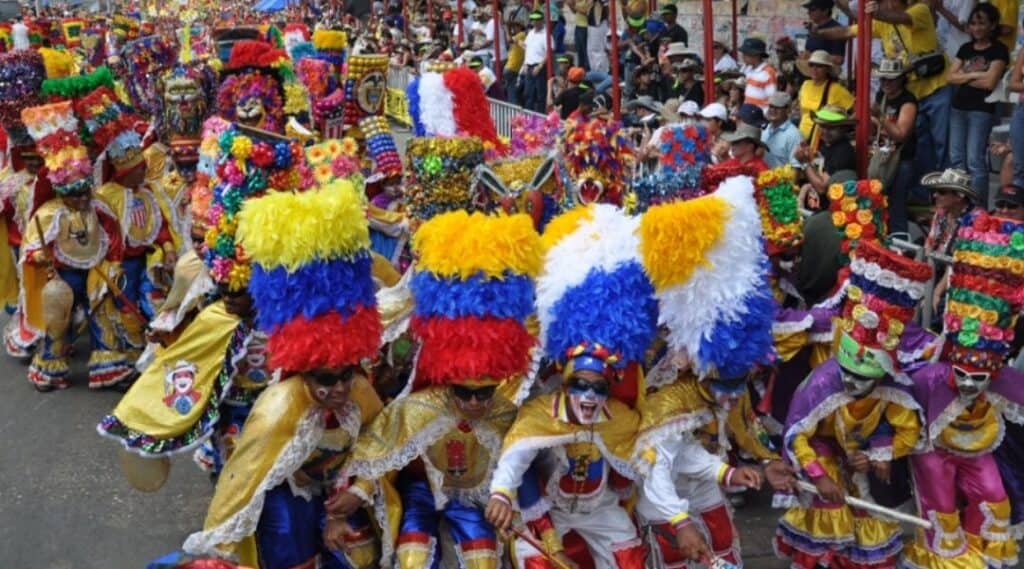
Every country in Latin America has its share of carnivals. The most famous ones in Colombia is the carnival of Barranquilla, the second-largest Carnival celebration in the world after the one in Rio de Janeiro. And then there is the black-and-white carnival of Pasto, the Manizales Fair, and many more.
Visit Medellin
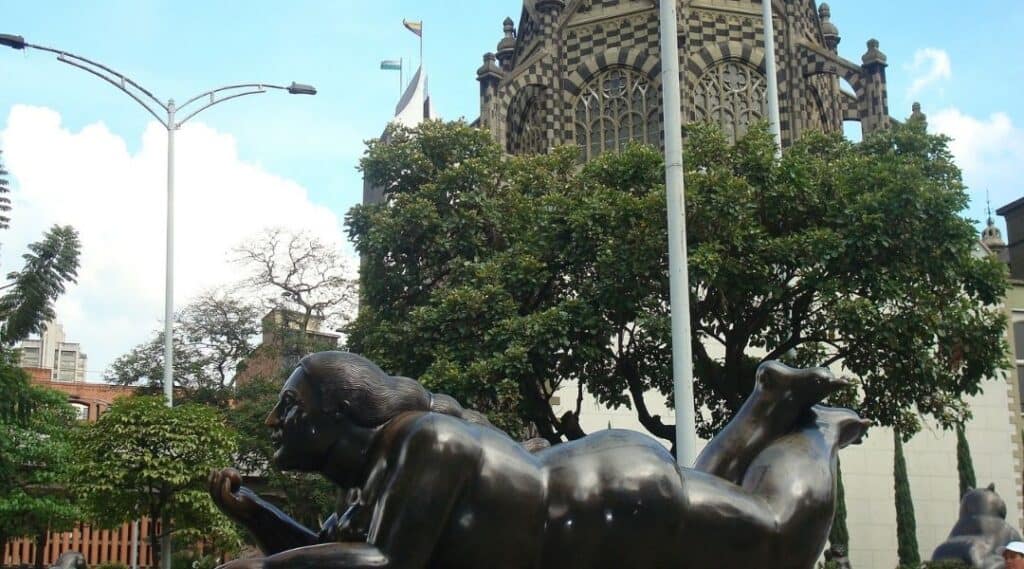
There are very few cities in Colombia that have been transformed as much as Medellin in the last 10 years. Thanks to its urban planning, botanical garden, subway, charming Paisa culture, and awesome climate, it is an expat darling today. It’s the second-largest city in Colombia with a lot of museums, parks, national monuments, and the Metropolitan Cathedral, the largest cathedral in the world built entirely in baked brick.
And if you are there in August, plan to attend the flowers festival.
Don’t Miss Bogota
Bogota is the capital and the biggest city in Colombia. And there is a lot more to see except for the historic center and La Candeleria. Head to Monseratte, an icon of Bogota’s cityscape to visit the monastery and have one of the best views of the city. There are a plethora of wonderful museums. Maybe start at Museo del Oro or Botero museum. Head to Parque de la 93 to try food from almost anywhere in the world.
Get Lost in the Charm of Villa de Leyva
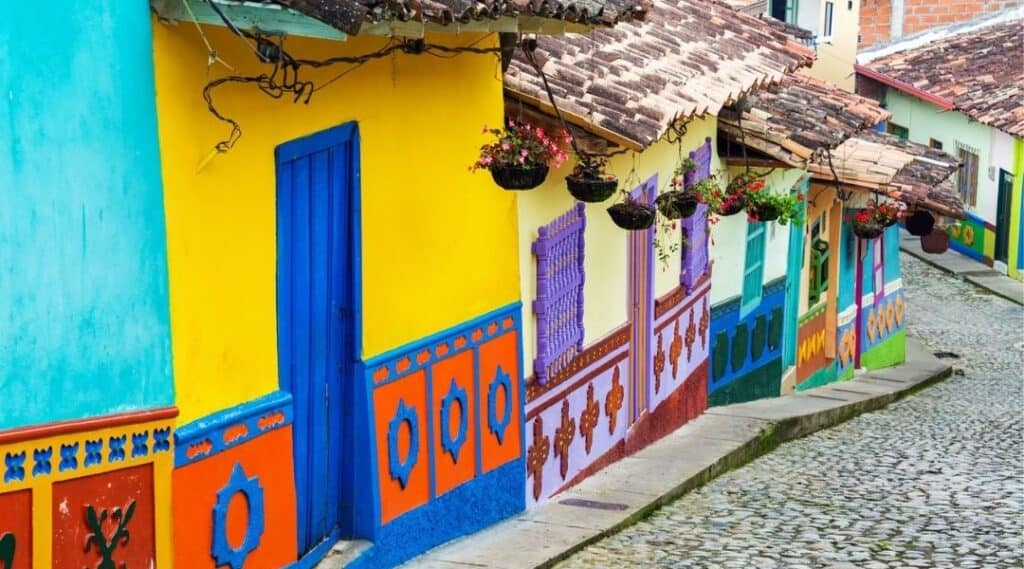
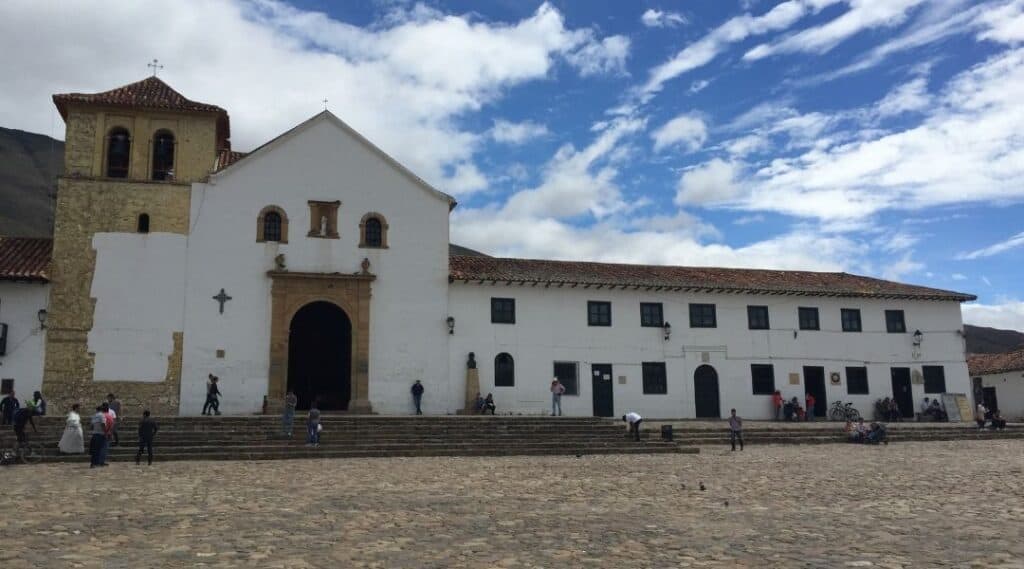
The small towns are a big part of the Colombian charm. So your visit is not complete without a trip to a pueblo or small town. If you are in Bogota, there are many small towns nearby such as Paipa, Villa Vicencio, Guatavita around. But none of them is as charming as Villa de Leyva, a colonial town famed for its pebblestone streets and large plaza, cool climate, and wineries.
Food You Must Try in Colombia
Like its Latin American neighbors, it’s common to find restaurants that serve food with menu del dia (menu of the day) that consists of soup, main course, a glass of juice, and a dessert. The price can range from 7,500 to 30,000 COPs depending on where you eat. If you are a vegetarian, you are not gonna have an easy time in Colombia. You can expect almost all the main courses and soups to have some or a lot of meat, chicken or fish or pork.
Here are some snacks and drinks I absolutely loved.
1. Arepas
Here is the thing. Arepas aren’t for everyone. It took me three months before a Colombian friend introduced me to a place where they made fresh arepas stuffed with cheese and I loved it. There are so many kinds of them, but the one stuffed with cheese remains my favorite. My suggestion is that you try one in a big bakery.

2. Empanadas
While many Latin American countries have their own versions of empanadas, the Colombian version is usually made with a corn dough with fillings of beef, pork, chicken, chickpeas, etc. My favorite empanadas remain the ones made with a creamy filling of chicken and mushroom. Head out to the area in front of Liceo Universidad Catolica behind Calle 46 in Bogota in the afternoon hours and you can get freshly made empanadas.
3. Tamales
Tamales are made of corn dough with fillings of pork and/or chicken, and some vegetables at times. If you are in Bogota, the best place to try a tamale is the Puerta Falsa. The 200-year old tiny snack shop barely seats 20 people. But don’t let it stop you. Have a tamale with hot chocolate and thank me later.
4. Drinks
Fresh juice is always available everywhere in Colombia. Try juice made from local tropical fruits like guanabana, Colombia is famous for its coffee. But the best coffee is exported. If you want to try a good cup of joe, try in a nice cafe.
Juan Valdez and Tostao are two chains that serve nice coffee. If you are in Bogota, I would definitely recommend Bourbon Coffee Roasters and Amor Perfecto. Try an aromatica (aromatic drink) or agua de frutas (water with fruits) especially when you are in a cold place like Bogota to warm yourself up. The drinks section will be incomplete without a mention of canelazo, warm spiced cinnamon cocktail made with aguardiente. I always tried it at street vendors who made a mean canelazo.

Traveling in Colombia
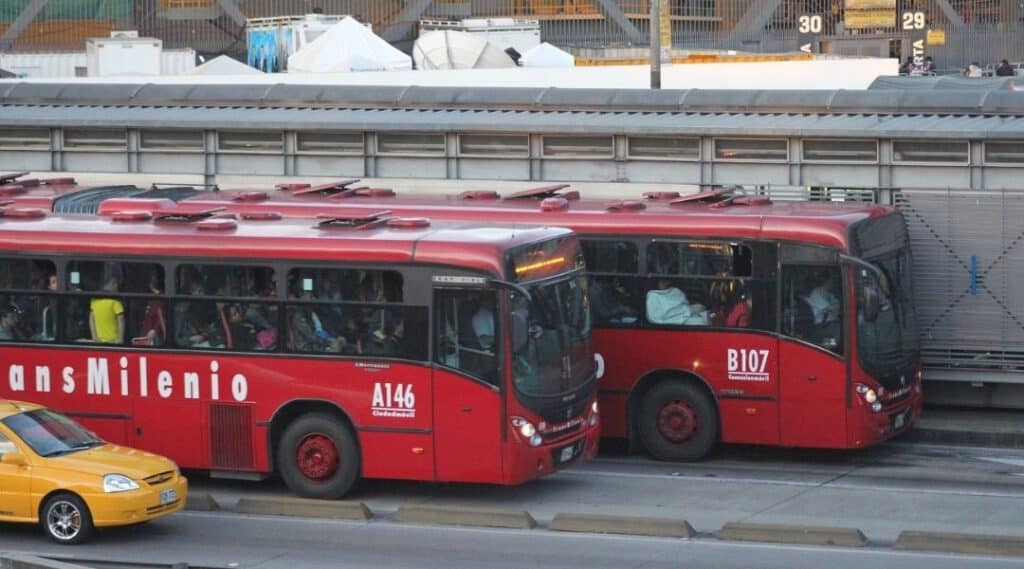
Budget airlines like EasyFly and VivaColombia are great for intercountry travel. That being said, the cheapest way to travel is by bus, and many times it is the only way. It’s also common to take Collectivos or mini buses that sit like 14 or so people for intracity travels. Bogota has transmilenio and Medellin has a subway.
They are pretty effective once you learn the routes and how to use them. Uber is still illegal in Colombia but I used it many times and hadn’t had any issues. If you need a taxi, the best way to get one is to get your hostel, tour company, or restaurant to call one for you. Or get one in a designated taxi pickup point. Make sure they are running on a meter when you enter. If the meter is not working, agree on a price before starting the trip.
Safety in Colombia
There used to be a time when Colombia probably was not safe. But that belongs to the past now. Don’t watch those TV shows about drug cartels of the 90s’ and picture Colombia like that. All the popular tourist cities like Medellin, Santa Marta, Cartagena, Bogota are pretty safe.
However, petty crimes like theft still happen in tourist places so you must be watchful. And there are some areas in every city that would be a bit more unsafe, especially at night. There’s a Colombian expression: “No dar papaya”, which would be translated to “Don’t give papaya”. What, it means is that you shouldn’t have something “sweet” out in the open (a Macbook, iPhone, watch, etc.) that would make you a target. Be watchful and don’t have that Macbook cover that exposes the Apple logo for the world to know how proud you are.
Pro Tips on Visiting Colombia
1. It’s Colombia, not Columbia.
Yeah I know in your head, they sound just the same and you think what’s the big deal but those two words sound pretty different in Spanish. So know the difference. Colombia is a country in South America and Columbia is a state in the United States.
2. Speak some Spanish.
Speaking even basic Spanish will go a long way. The majority of the country speaks Spanish and Spanish only. Google translate can help but your travel experience will be much more enriching when you can interact with the locals.
Read This: Helpful Tips for Conversational Spanish while traveling + Basic Spanish Phrases
3. Cash is the king
While some people might accept US Dollars, Colombian Pesos are used everywhere. Notes come in 1,000, 2,000, 5,000, 10,000, 20,000 and 50,000, with coins in 50, 100, 200, 500, or 1,000. There are places where credit cards are accepted, but Colombia has a long way to go to being cashless. So be prepared to have cash on you always.
4. Keep your stuff with you all the time
Be it a restaurant or a bus or subway or hostel, always keep your valuables with you. Don’t leave them unattended. Thefts are common, especially in big cities like Bogota or Medellin.
5. Don’t ask them about Pablo Escobar
Yes, I know you have heard about the guy. But this is someone who committed countless heinous crimes starting from blowing a plane full of hundreds of people to killing presidential candidates. Colombia has moved on since then and it’s time you do as well.
I am not saying you can’t talk about the guy with anyone, but just don’t ask your taxi driver or date to make some conversation. And definitely don’t make jokes about it.
This is a post by guest contributor Deb
Author’s Bio Originally from India, Deb has fallen off rafts every time he rafted, been lost in remote towns where he didn’t speak the language and had no phone, detained in immigration, come close to losing everything when backpacking, hosted Couchsurfing events in cities without knowing a single soul. And through all of it, he has come to the realization that traveling makes him who he is. He always ends up finding his zen through writing and cooking, and would be up for a good hike any day, and wears many hats like teaching EFL, working in technology and blogging. He is the founder of The Visa Project, with a mission to have updated info on visas and making people visa smart. Follow her adventures on Instagram, Facebook and Pinterest.