
Bringing the right equipment on a hike is important. Not only will it make your hike more enjoyable, but it might even save your life if something bad happens.
There are many things to consider when packing for a day hike. While it is important to pack as lightly as possible, there are certain things you cannot hike without.
What you will need to bring depends on the weather, your hikes’ duration, and your personal preferences. This list, however, covers all the essentials as well as some useful gadgets.
As I love hiking, I’ve been on plenty of day hikes, from the Morskie Oko hike in Poland and numerous hikes in Belgium to hikes in the Himalayas and Andes Mountains.
I hope that this day hike packing list will help you stay safe and comfortable on your next hiking adventure, whether it’s in the mountains, through forests, in the desert, or along the coast.
So, without further ado, here’s a complete list of what to pack for a day hike.
Packing List For a Day Hike: Day Hike Essentials for Beginners
Hiking backpack
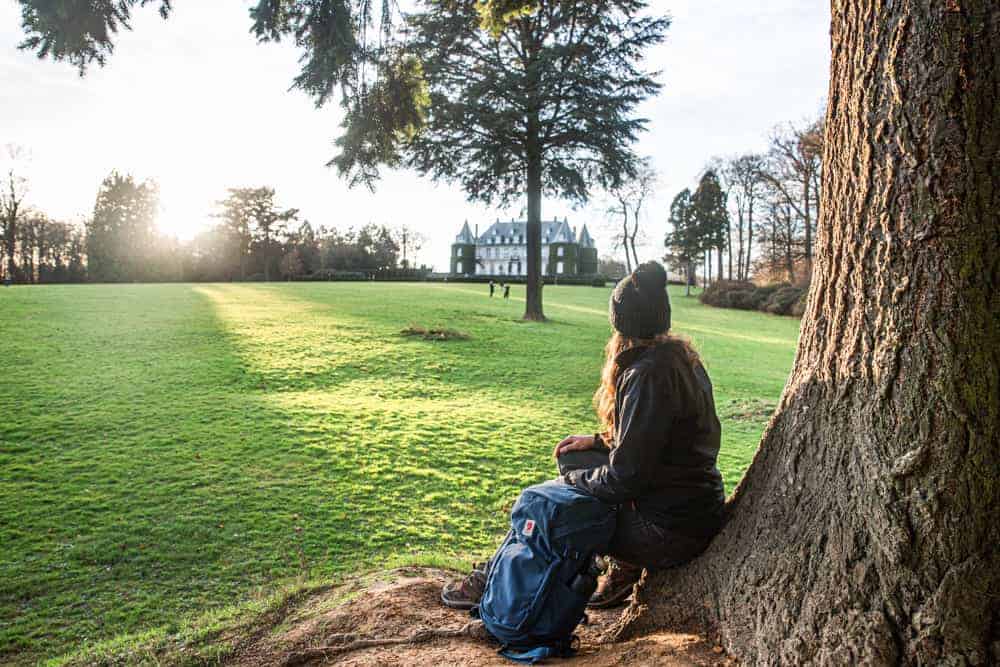
One of the must-haves for a day hike is a good, comfortable backpack. You’re going to have to carry your gear in it all day long, so it’s important to choose the right one. Believe me, your back will thank you later!
When choosing the right backpack, there are several things to consider. First of all, it should be spacious enough to hold all your gear. A good backpack also distributes weight evenly to your hips rather than your shoulders.
For most hikers, a backpack between 20 to 25 litres will be ideal for a day hike. These are big enough to carry extra layers, snacks, and your camera. If you’re a super light packer, however, a 10 to 15-litre backpack might be big enough.
When it comes to choosing the right brand, you can’t go wrong with Osprey, The North Face, or Fjallraven. These are some of the top outdoor backpack brands and their packs are of great quality.
Backpack rain cover
A good rain cover for your backpack will keep your gear dry in case it starts raining while you’re hiking. Rain covers are super lightweight and don’t take up a lot of space.
I can’t recall the number of times this item saved my camera during a hike, so I definitely recommend bringing one.
Hiking boots
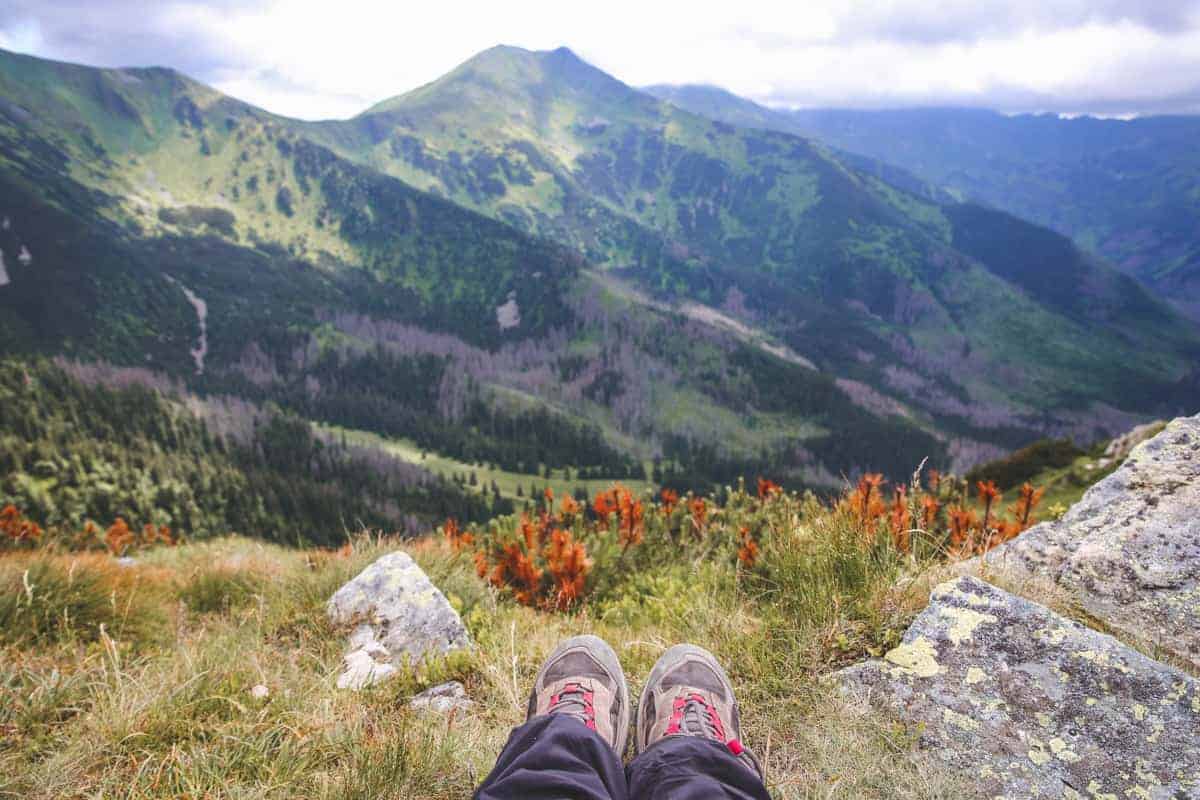
Comfortable hiking boots are crucial on any hike. The right boots have a good grip, are waterproof, and will protect your feet on rougher terrains.
This being said the kind of hiking boots you should get depends on the type of hiker you are. If you’re planning on hiking on paved trails only, trail walking shoes should suffice.
Make sure to break in your shoes before your hike. There’s nothing worse than walking with painful feet all day long because your feet hurt.
Some of the best high-quality brands of hiking boots out there are Salomon, Lowa, and La Sportiva.
Hiking socks
A pair of Merino wool hiking socks that prevent blisters is another important item to add to your day hike packing list.
Merino wool is known to dry quickly, but it’s also a fabric that remains comfortable when wet. This is why these are the perfect pair of socks for any hike.
Top
When it comes to your base layers, stay clear of cotton. Cotton absorbs too much moisture, so it won’t keep you comfortable or warm.
Depending on the weather, you can opt for polyester or merino wool instead, these fabrics absorb little moisture and dry pretty fast.
Pants/shorts
Many hikers love zip-off hiking pants because you can wear them as pants as well as shorts. But no matter if you choose to wear pants, shorts, leggings, or something else, make sure these are made of quick-dry fabrics.
It’s also important to choose a pair of pants or shorts that are easy to move in and don’t tear if your hike requires rock scrambling (I’ve been there and believe me, it sucks!).
Fleece
A fleece jacket can come in handy on cooler days. These are not only lightweight but also breathable, which makes them perfect to hike with.
I bring mine with me on warmer days as well. You never know how windy it might get or if the weather is going to turn.
Waterproof jacket
A lightweight waterproof jacket will not only keep you warm, but it will also protect you from the wind and rain.
Make sure you get a waterproof jacket and not a water-resistant one, though, the latter offers a lower level of protection, so there is a difference.
Refillable water bottle
Staying hydrated while hiking is essential. Your body needs water to function, so it’s super important to bring enough of it.
A rule of thumb is to bring 0,5 litres of water for every hour on the trail. However, if you’re hiking in the heat or if your hike is more strenuous, make sure to bring 1 litre of water per hour.
The best way to carry your water is by using a refillable water bottle or carrying it in a water reservoir if your backpack has enough space for it.
Water purification system
As water is quite heavy, it’s a good idea to carry a water filter for longer hikes (or in case you get lost). This way, you will be able to refill your bottle at a source if you run out of water.
Make sure to research if there are places where you will be able to refill your bottle in advance, though. You don’t want to be stranded on a trail without any water.
My recommendation: Lifestraw, a compact and lightweight water filter that is perfect for hiking and traveling.
Lunch
Another important thing to bring on a day hike is lunch. It’s crucial to make sure that your body takes in enough nutrients to keep your energy up all day.
Sandwiches, wraps, pasta salad, and quiche are good options that are easy to pack.
Snacks
When you’re packing for a day hike, it’s important to bring enough snacks. The best food for hiking is packed with nutrients. Consider bringing nuts, seeds, dried fruits, granola bars, etc on top of your lunch.
I always bring more snacks than I think I will need when I’m covering a lot of distance. You’re burning more calories when you’re hiking, and I tend to feel dizzy pretty quickly when I don’t eat enough.
This is something you will want to avoid at all costs when you’re hiking.
Map and compass
A physical map along with a compass is the most reliable kind of navigation. Unlike your phone, these items don’t have batteries that can die.
So if you’re hiking in more remote areas, I highly recommend bringing these.
Smartphone
Although they are recommended, physical maps are not always very convenient and there are some good navigation apps out there.
Maps.Me, Green Tracks, and Gaia GPS are some of the most popular ones. Don’t forget to download the map for offline use, though.
Sunscreen
It’s important to protect your skin from the sun when you’re hiking. You can get a sunburn on cloudy days too, so make sure to always wear sunscreen that is at least UPF 30 (UPF 50 is even better).
Don’t forget to reapply it throughout the day. Ideally, you should reapply sunscreen every two hours, and even more frequently when you’re sweating.
Sunglasses
A good pair of sunglasses is another essential item to bring on any hike. They will protect you from the sun and snow blindness.
Consider getting polarized sunglasses if you need a new pair, these will allow you to see more clearly.
Chapstick
Protecting your lips is just as important as protecting the rest of your face and chapstick with SPF will do just that.
Hat
Wearing a hat is a great way to protect your face and neck from the sun. Though you should still wear sunscreen when wearing a hat, it will give you extra protection.
Packing For a Day Hike: Safety items
First-aid kit
A lightweight first-aid kit that you can keep in your backpack is an essential item on any hiking packing list. You never know what might happen.
Blisters, for example, are one of these common hiking injuries, and you will be glad you brought blister pads or bandages if you have one.
Other essentials your first aid kit should contain are antibacterial ointment, antiseptic wipes, and tweezers.
Don’t forget to add medication to your kit too. These can be prescribed meds or over-the-counter meds such as Ibuprofen, Aspirin, and Imodium.
Headlamp
Even if you start hiking early in the morning, it’s never a bad idea to carry some sort of lighting with you in case you get caught on the trail after dark.
This happened to me during the Triund Trek in India and I was so happy that I had my headlamp with me!
Although both will do the job, I prefer carrying a headlamp over a flashlight because it’s hands-free.
Emergency blanket
Emergency blankets are designed to keep you warm in case something happens and you have to spend the night outside.
Indeed, these are rarely needed, but they might save your life! You never know what might happen, after all, and it’s better to be prepared.
Here is my attempt at proofreading:
My recommendation is this one if you only need the emergency blanket itself. However, I personally have this package, which includes the blankets, a storage pouch, EVA case, and even emergency whistles.
Emergency whistle
A whistle is not only cheap, but it’s also a very lightweight item that doesn’t take up much space. You can use it to garner attention in case of emergency.
Lighter and fire starter
These are items that you won’t need on every hike (luckily), but they might save your life in case you get lost and have to spend the night in the wilderness.
Both a lighter and a fire starter are inexpensive items that don’t take up much space, so make sure to bring them just in case.
Additional Items to Pack for a Day Hike
Hiking poles
Hiking poles relieve a ton of pressure on your knees, especially when hiking up or down. On top of that, they can also help you keep your balance and prevent you from falling.
I was a little skeptical about using hiking poles at first because they occupy your hands, but I love using these on more strenuous hikes and can definitely feel the benefits.
Hip belt
A hip belt allows you to quickly access essential items like your phone, snacks, or whatever you want to put in. This way, you won’t have to take off your backpack each time you need something.
It may not be an essential item to think of when packing for a day hike, but it is a super handy one that I love using.
Power bank
If you’re using your phone to navigate, it’s a good idea to bring a lightweight power bank in case your battery dies. You may not need it on most day hikes, but it’s nice to have in case you do need it or if you get lost or injured.
From personal experience, I highly recommend a solar charger as it can be a real lifesaver in emergencies. The ability to harness the sun’s power to charge devices is incredibly convenient, especially when hiking or camping off the grid. A solar charger ensures you never run out of power in remote areas with no electric access. I’ve found solar to be the most reliable and portable charging solution for outdoor adventures and preparedness.
Trash bag
While hiking, it’s important to dispose of waste properly and to keep the trails clean.
A banana peel, orange peel, apple core, and any kind of fruit should also end up in your trash bag. Though the fruit does decompose, it takes a while to do so, and it’s not natural for most environments.
It’s also important to know that tossing fruit and other food waste in nature is bad for wildlife.
Binoculars
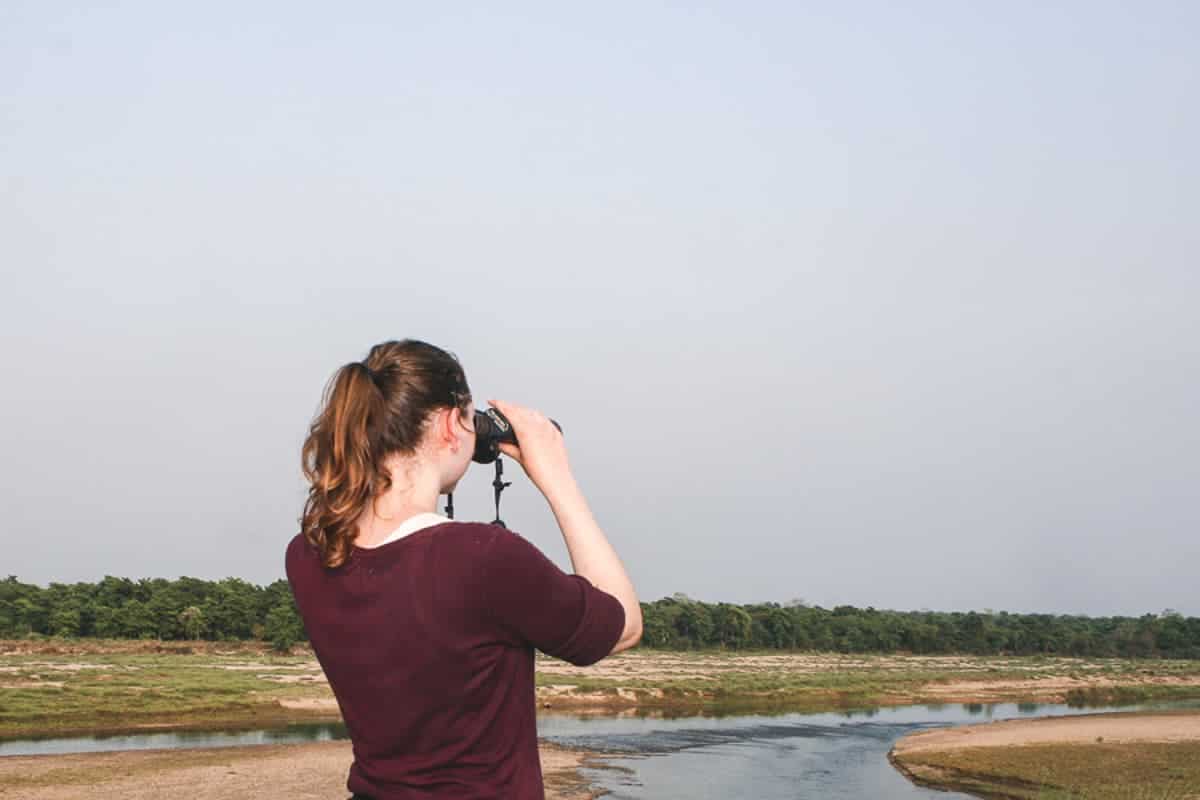
If you enjoy birdwatching and viewing wildlife, then a pair of lightweight binoculars is something you don’t want to forget when you’re packing for a day hike.
They don’t take up much space and will allow you to watch wildlife in detail.
Toilet paper and trowel
I guess these speak for themselves. Toilet paper takes up to a month to break down completely, so it’s okay to leave it in the woods, however, it’s important to bury it with a trowel.
In addition, you could also use biodegradable toilet paper, this kind of toilet paper is a bit more expensive, but it breaks down four times quicker than regular toilet paper.
Buff
A buff is a multi-functional piece of headwear that can serve as a bandana, a face mask, a beanie, a headband, and more.
It’s a handy item that’s super light and doesn’t take up much space.
Microfiber towel
If you come across waterfalls, rivers, or lakes on your hike and you enjoy swimming, then bringing a quick-dry towel is a good idea.
The nice thing about microfiber towels is that they’re compact, light, and fast-drying, which is perfect for hiking.
Hand sanitizer
I guess we’ve all learned how important it is to sanitize our hands during the COVID-19 pandemic.
Bringing a small bottle of hand sanitizer on your hike can prevent gems from ending up in your eyes or your mouth.
On a hike, you can use it after going to the bathroom or before eating.
Day Hike Packing List: Camera gear
Camera
Although you can also use your smartphone, I hardly ever hike without bringing my camera. I use a DSLR (and love it), but mirrorless cameras are more popular among hikers because they’re lighter.
Some popular mirrorless cameras that my friends own and love are the Sony a7 III and the Canon M50.
Tripod
If you’re a photography enthusiast, a lightweight tripod is a handy item to add to your day-hike packing list. It will allow you to take sharper images in all light conditions and shoot long-exposure photos.
On top of that, a tripod is also a handy item to have if you’re hiking by yourself and want to take pictures of yourself.
My recommendation: Zomei travel tripod, a lightweight tripod that fits in a 20-litre backpack. If you’re in the market for a lightweight, compact travel tripod for your phone, I highly recommend this one that I always keep in my bag. It folds up small but is sturdy and easy to set up on the go.
GoPro
As they’re lightweight and waterproof, GoPro cameras are perfect for hiking. They don’t take up much space and you can both film and take pictures with them. I have the GoPro Hero11 and love it.
Drone
I love bringing my drone on hikes! These flying gadgets will allow you to film and take pictures from a unique perspective.
Contrary to what I used to think, lightweight drones that are easy to pack do exist!
There are some great mini drones (take the DJI Mini 4 Pro, for example) on the market and these are perfectly suited for traveling and hiking.
Day Hike Packing List: Region-Specific Items
Insect repellent
Bug spray is an essential item to bring if you want to protect yourself from irritating bug bites.
You won’t need it everywhere, but make sure to bring insect repellent if you’re hiking in a place with a lot of bugs.
Bear spray
If you’re hiking in bear country you will want to bring bear spray in case you end up face-to-face with one of these creatures. Make sure to only use this as a last resort though.
The best thing to do when you encounter a bear is to stay calm and walk away very slowly. If this doesn’t work, you can use the spray to escape.
Packing list for a day trip: Hiking During Winter
If you’re hiking in cold temperatures, you will want to bring some extra items. You will find these below.

Base layer
A base layer is a layer you’re wearing directly against your skin. Its purpose is to wick away sweat so that you don’t get cold.
The best type of baselayers are made from merino wool, this fabric is soft, odour-resistant, and quick-drying.
Mid-layer
This layer will keep you warm, it’s the layer between your base layer and outer layer.
It all depends on the weather conditions, but most hikers wear multiple mid-layers. These can be anything from long-sleeved technical tops to fleece jackets, sweaters, and soft-shell jackets.
Being able to add or remove layers according to the temperature is important.
Hardshell jacket
To keep the rain and snow out, and to protect yourself from the wind, you will need a good hardshell jacket.
Some of the most important things to consider when buying one is that they need to be windproof, waterproof, and breathable.
There are thousands of hardshell jackets to choose from, so make sure to do some research in advance.
Some of the best high-quality brands out there are Mammut, Arcteryx Alpha, and Outdoor Research.
Winter hiking pants
When you’re hiking, your legs are the body part you will move the most. So when it comes to hiking pants, you will want to wear a comfortable pair.
Apart from freedom of movement, a good pair of hiking pants should also offer you protection from cold, wet, and windy weather.
There are lots of hiking pants on the market, both softshell and hardshell. It’s good to know that softshell pants are warmer, but hardshell pants will offer you better protection against the rain.
For optimal protection, you could also combine softshell pants with rain pants.
Apart from that, some pants also come with vent zippers, pockets, and other extra features, it all depends on your preferences.
Snowboots
If a lot of snow is expected, you will need snow boots. These are higher than regular hiking boots and will protect you from the snow.
Woollen socks
Warm woollen socks are important to bring on a winter hike. They will keep your feet warm and help prevent blisters.
It’s also a good idea to bring an extra pair in case your feet get wet.
Beanie
To keep your head and ears warm, you will need a good synthetic or merino wool beanie.
A significant percentage of body heat is lost from the head, so it’s important to keep your head warm when you’re hiking in cold weather.
Gloves
Gloves are another essential to protect you from the cold. Make sure your gloves are windproof and waterproof, though.
You can also bring glove liners that you can wear under your regular gloves for extra warmth.
Neck warmer
A neck warmer or neck gaiter will keep the cold out from the gap between your head and your jacket. These are a must-have when you’re hiking in cold temperatures.
When it gets really cold, you can also pull your neck gaiter over your nose and ears.
Crampons
Crampons were originally designed for ice climbing, but if you’re hiking on ice or hard snow, they can come in quite handy as well.
A good set of crampons will prevent you from slipping and falling.
Spare clothes
Lastly, when you’re packing for a day hike in the snow, it’s a good idea to bring spare clothes. This way, you can change clothes if you get too wet.
If you don’t want to carry too many things, I’d recommend at least bringing an extra pair of socks and gloves.
Packing for a Day Hike: Useful Tips
- Avoid excess weight and pack as light as possible.
- Use your side pockets or a hip belt to store items you need to access often so that you won’t need to take off your backpack all the time.
- Remember where everything is in your backpack so that you can access it quickly if you need something.
- Make sure your pack’s weight is distributed properly. Position heavier items close to your spine and near the middle of your back, this is where your center of balance lies.
- Keep handy items on top of your backpack so that you can easily access them (rain jacket, sunscreen, insect repellent, etc).
- If you need to buy more gear, always opt for more lightweight items.
- Pack liquid items separately from the rest of your stuff.
Author’s bio: Laura Meyers is the founder of Laure Wanders, a cultural travel and adventure blog. She has been travelling solo for over 6 years and loves exploring unique destinations worldwide.