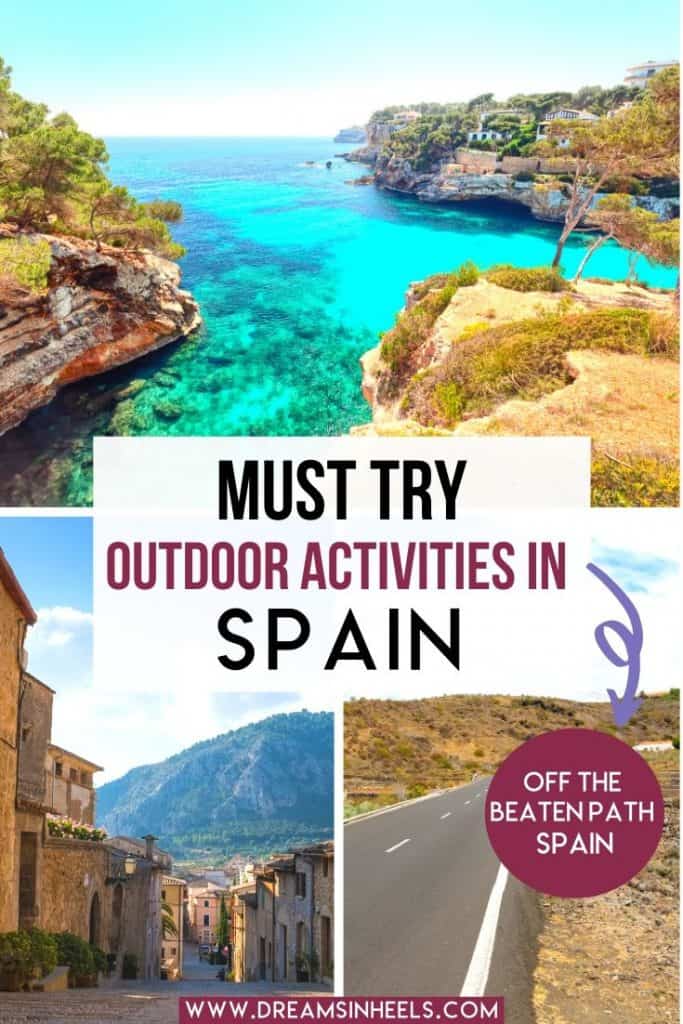

Looking for outdoor activities in Spain? Want to see Spain off the beaten path? Here is a guide, including the best outdoorsy things to do in Spain. Read on.
Spain is a fabulous country in which to experience the great outdoors. If you love being active, then the hiking, cycling and water sports here are some of the best in Europe. With fabulous landscapes to explore, lively coastal resorts to enjoy and some real hidden gems to find, Spain really is a great destination for adventures, whatever your comfort zone!
Where to stay in Spain for a unique experience?
Stay in a Parador for a unique Spanish experience. Paradors are state-run hotels, all situated in what used to be monasteries or other notable historic or religious buildings.
Expect a mixed bag depending on where you stay, some offer outright luxury whilst others are a bit more basic. Whichever though, you’ll be surrounded by rich Spanish history and ambiance.
Booking.comOff The Beaten Track Spain: Outdoor adventures in Spain you must do

Best Hiking in Spain
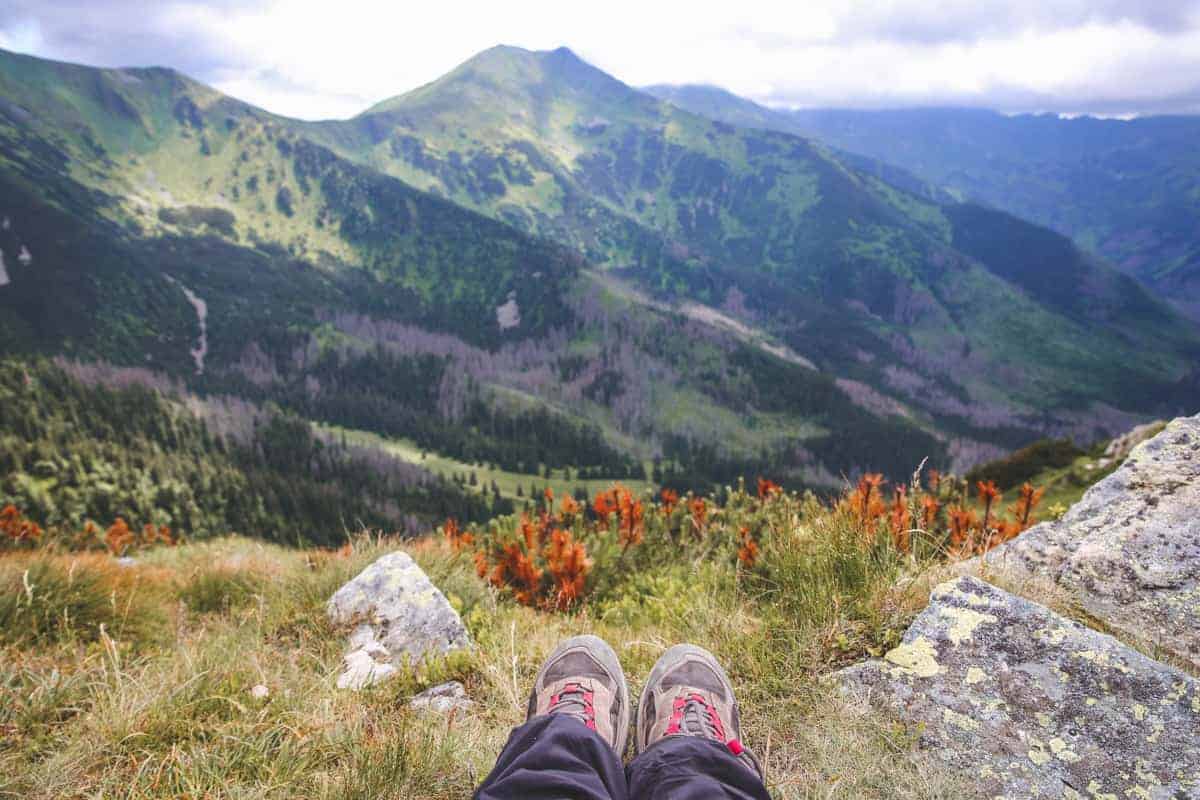
Spain is the second most mountainous country in Europe, so it’s no surprise that there are some spectacular hikes in the dramatic mountains in both the north and south of the country. Hiking in Spain is not the national pastime it is in European alpine countries and as a result, routes are not always well marked or even known about, other than locally.
If you’re road tripping in Spain and planning to hike as you go, use the internet to research and a GPS hiking app such as View Ranger to help find trails.
The Pyrenees
Probably the most famous of Spain’s mountainous areas and shared with France, the Pyrenees are gentler than the Alps, but they still offer the clean mountain air, huge skies and glorious views that are good for the soul.
Head for the Torla and the Ordesa y Monte Perdido National Park, where you’ll find some of the most dramatic landscapes in Europe. Long disappeared glaciers have left enormous gouges in the land, creating breathtaking circo’s, beautiful lush valleys and almost vertical walls, studded with raging waterfalls and pine trees.
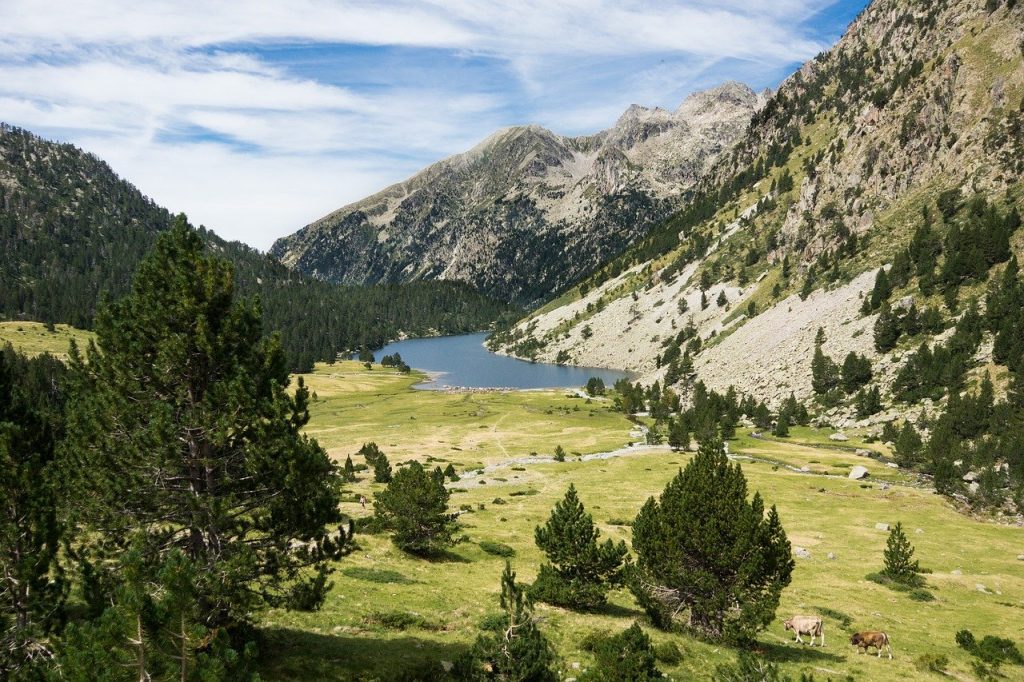
The Ordesa y Monte Perdido National Park is criss-crossed by the GR11 (Grand Recorrido) long distance footpath and you can pick up stages of this route in many places in the Spanish Pyrenees.
There are four fantastic hikes from the Pradera (car park) of the national park that can be done in a day and will take you through the valley to the spectacular Circo de Soaso, an enormous circular bowl with the gorgeous Cola de Caballo (Horsetail Falls) at the end of the hike.
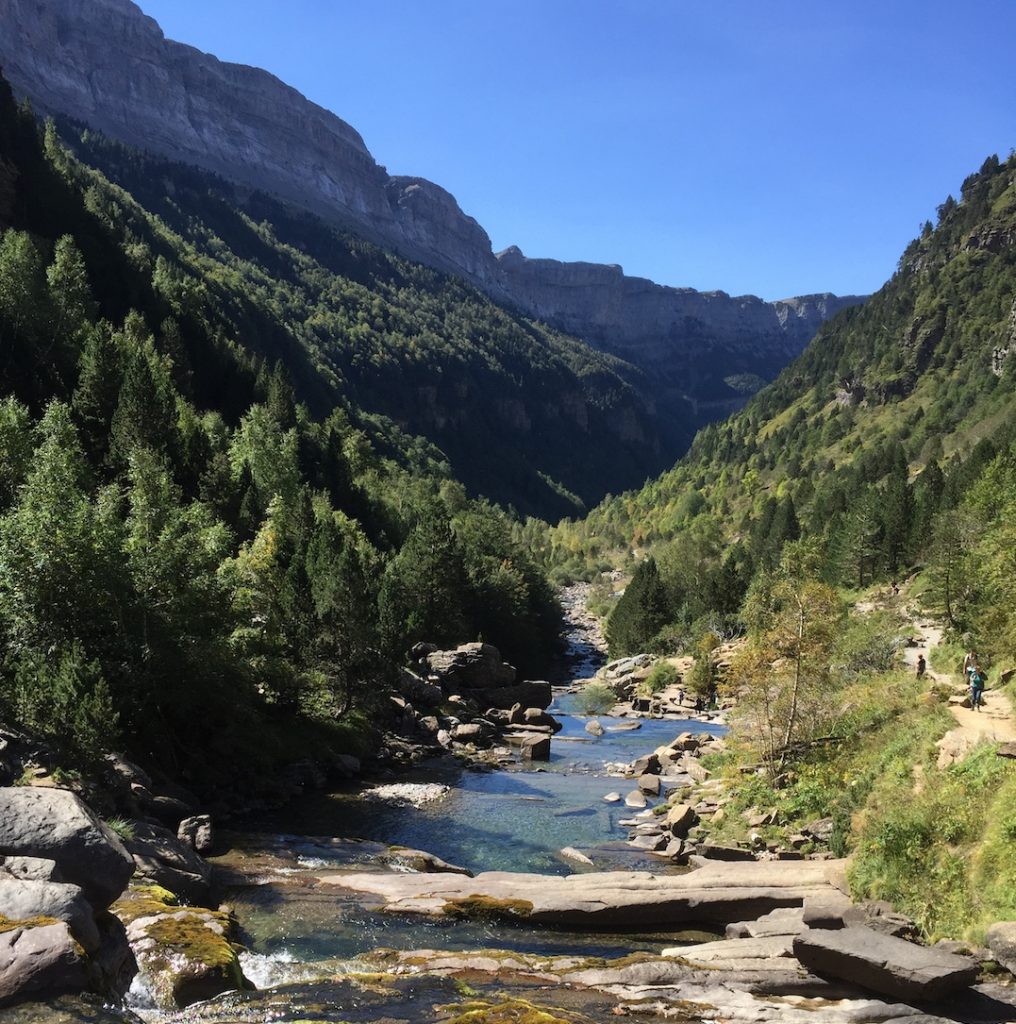
Take the valley floor route if you prefer an easy (but long) hike, with not much elevation gain. You’ll be surrounded by grass and wild flowers and follow the route of the rio Arazas, as its crystal clear water tumbles and rushes through the valley.
For a bit more adventure, take one of the high routes such as the Faja de Pelay, with it’s 800m switch-back climb to the mirador at the start of the Ordesa Valley, where you’ll have a chance to catch your breath and enjoy the views across the peaks to La Brèche de Roland, a natural and iconic gap on the border with France, before taking a slow descent into the valley.
If you’re looking for an extra adrenalin rush, try a via ferrata. A vertical or horizontal route
equipped with ropes, ladders, handrails, chains, hanging bridges and spikes for footholds, via Ferrata in the Pyrenees is for experienced hikers or those looking for adventure in difficult to access areas. A steel cable is fixed along the whole route, to which you are attached by a harness, so safety is pretty much guaranteed.
Top Pyrenees Tip – take your swimmers and go for a dip in the inviting and cool Ordesa Valley river.

The Sierra Nevada
This beautiful mountain range in Andalucia is at it’s best in late spring, when the snow is melting and the wild flowers are abundant. Head for the high Alpujarras where you can find some of the best hiking in Spain.
In the beautiful Poqueira Gorge, follow the well-trodden route from Pampaneira to the pretty village of Bubion and on to Capileira before crossing the valley to return again. The views to Mulhacen, the highest mountain on the Iberian peninsula, are simply stunning, with the mountain dominating the whole outward leg of the hike.

Trevelez is the highest village in Spain and as well as being the start point for several famous Mulhacen hikes, including the Siete Lagunas (seven lakes), you can also find some of the best Iberian jamon (ham) there. Jamon de Trevelez is a delicious, melting air-dried Serrano ham which is created by the perfect altitude, temperature and humidity found in the natural environment of the region.
There are a number of places to sample and buy this Jamon in Trevelz itself, where you can also see the drying and curing process taking place. I like mine simply sliced as a tapa with a cold beer, especially after a long hike!
Top Sierra Nevada Tip – if you are looking for handicrafts, the Alpujarra villages are the place to buy beautiful and colorful hand-woven blankets and rugs.
The Picos
This small, but perfectly formed mountain range straddles the regions of Asturias, Cantabria and Castilla y León, on the northern Atlantic coast. The full name of the Picos de Europa comes from the range being the first sight of the European continent for sailors crossing the Atlantic from the new world, America
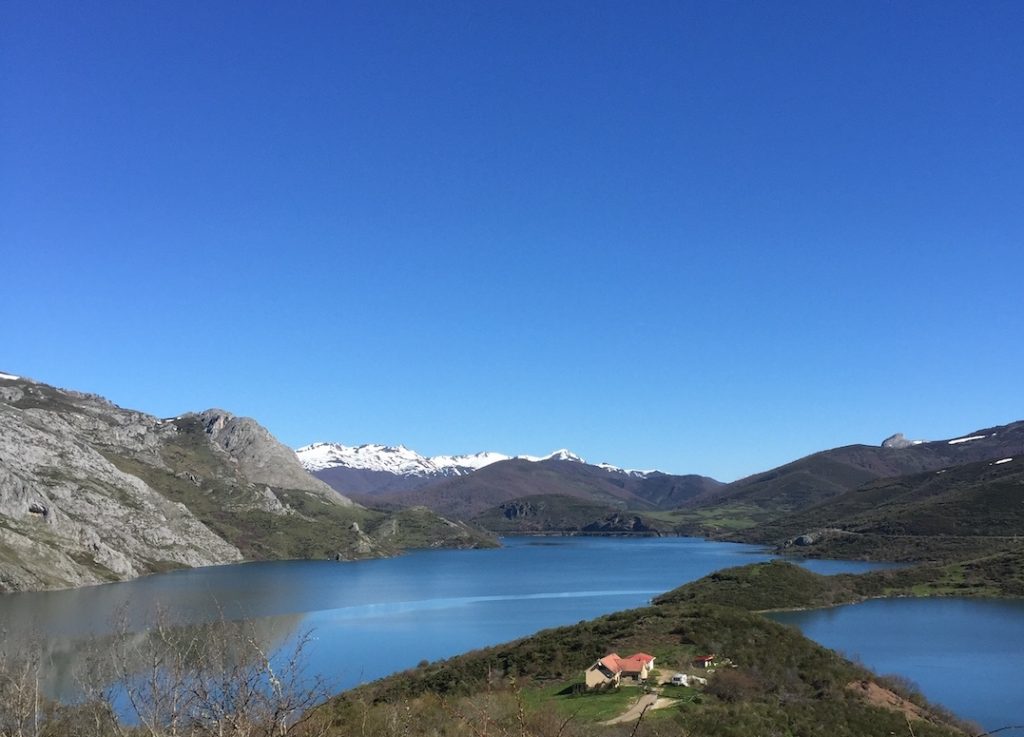
The Picos are a UNESCO Biosphere Reserve and characterised by dramatic massifs, vivid green pastures and rocky outcrops. Hike along the Divine Gorge, one of the most spectacular hiking routes in Spain and possibly Europe.
The route runs alongside the rushing riu Cares, the trail is surrounded by soaring, near vertical cliffs, steep drops and narrow paths…not for the nervous hiker but well worth a few heart-stopping moments for the experience in this raw and wild environment.
The Picos is also home to a fantastic array of wildlife, such as the Golden Eagle and the Chamois, a goat-antelope native to this area. As well as enjoying the wildlife here, if you have an adventurous spirit you can try canyoning, caving, mountain climbing and kayaking in these diverse mountains. Base yourself in Cangas de Onís for the most dramatic hiking.
Top Picos Tip – head the 30 minutes north to the coast for huge beaches of soft golden sand, big waves, rock pools and drama. Our pick would be Cobreces, a small village which is home to a Cistercian abbey that makes and sells the most amazing cheese and a beautiful bay that will fulfill all your beach dreams.
Best Cycling in Spain
Via Verdes
Via Verdes, or green ways, exist all over Spain. They are a 2,700km network of dis-used railway lines which have been taken up and reconditioned for pedestrians and cyclists. All are in spectacular countryside, through landscapes which may otherwise remain unseen.
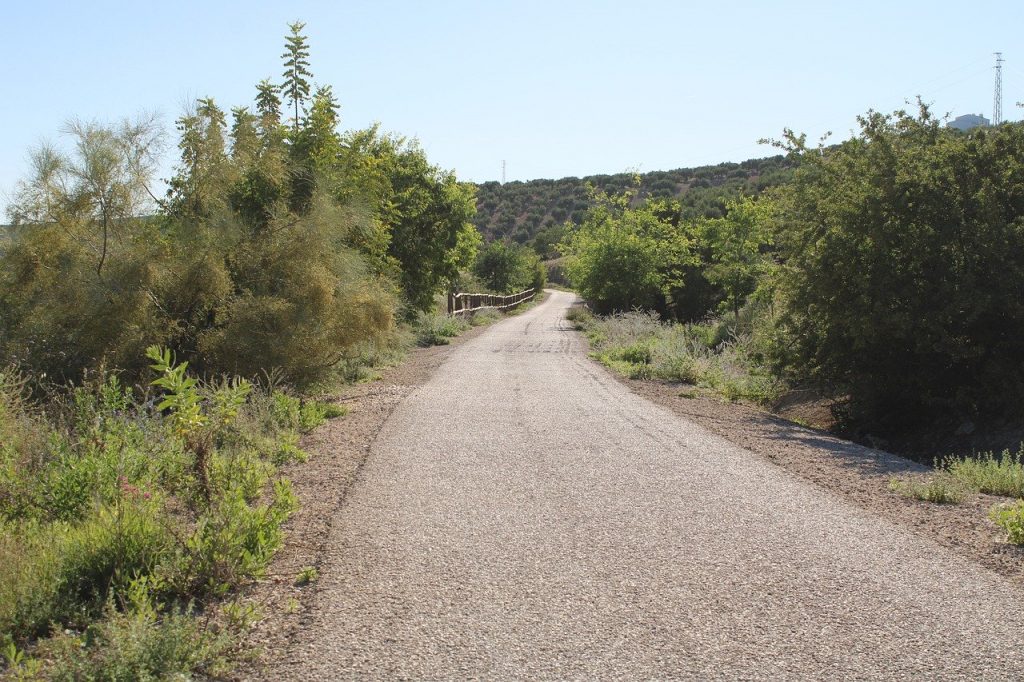
The Sierra via verde is one of the best of the 117 you can cycle, with 30 tunnels and five stations on the route. At Peñón de Zaframagón stop and watch the largest colony of Griffon Vultures in western Europe as they gracefully soar around the rock.
This 36km route passes through perfectly manicured olive groves, stopping at old stations along the way for refreshments before ending (or starting) in Olvera, a pretty pueblo blanco with an imposing church and castle.
Or head north to Huercal-Overa in spring, and cycle the 26km along the old Guadix-Almendricos line through kilometer after kilometer of cherry orchards in bloom. In Alicante, you can cycle through tunnels and viaducts in the land of vineyards and orange trees. There is a via verde in Spain for everyone!
Top Via Verde tip – book an old railway carriage to stay in at the start or end of your ride, the ones in Olvera are very cute!
Mountain Biking in Spain
One of Spain’s best kept secrets, mountain biking (or MTB) is huge in the country. Whether you want the workout of the hard climb or the thrill of the downhill, mountain biking is a fantastic way to see a country and get your kicks at the same time!
The gorgeous Spanish climate makes the country perfect for mountain biking practically all year round and there are many types of landscapes to choose from, including the many Biosphere Reserves, of which Spain has the most in the world.
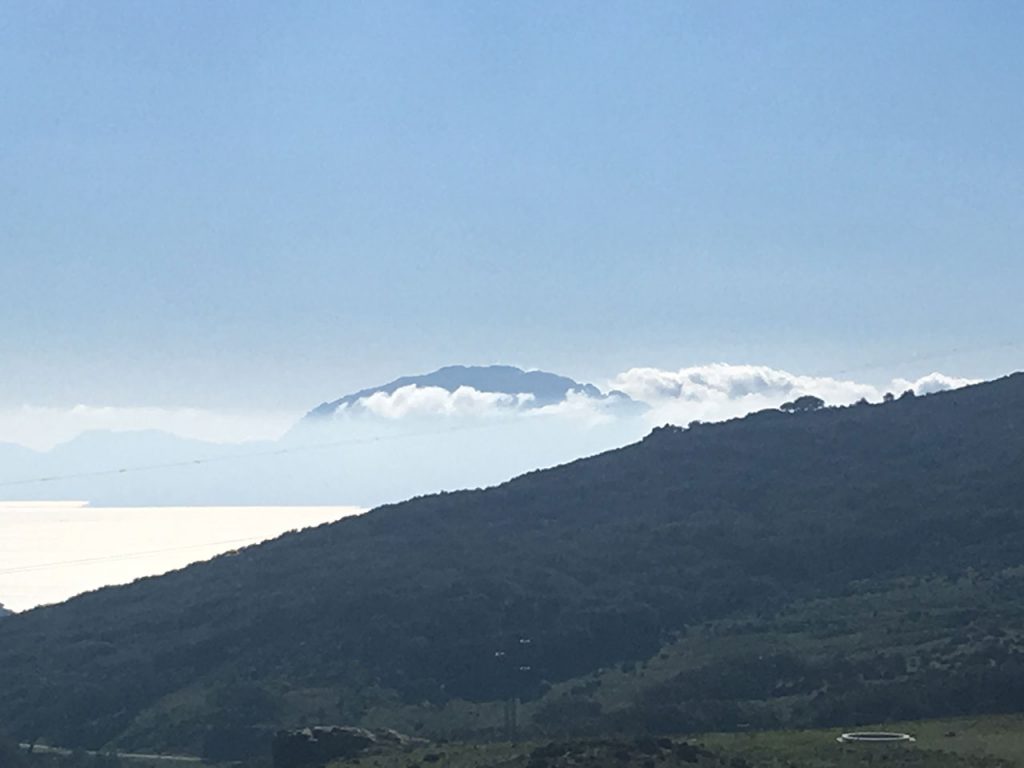
Head to Ojen, north of the vibrant resort city of Marbella and high in the hills. There are over twenty all-mountain and downhill trails that start and end here. You can hire bikes in the town, or take a guided tour over several days through the pretty pueblo blancos of the region.
Tarifa, the southernmost tip of Spain and best known for wind and water-sports is also another hidden gem for mountain biking. On the high routes you will have spectacular views of the mighty Atlantic Ocean to the west, the gentler Mediterannean Sea to the east and the African continent to the south. There are also coastal routes which are more flat but mean you can stop at secluded coves and beaches on your ride, try the fun and fast Costa Vuelta route from Tarifa.
Top MBT tip – if you’ve never mountain biked before or are not super-fit, use an e-bike, they’ll take you further and help your legs up the hills!
Road Cycling in Spain
This is a huge sport in Spain, with many professional cycling teams choosing to train here. With quiet roads, and perfect weather in winter, spring and autumn (it’s too hot in summer for most) it’s no surprise that in the mountains of the Marina Alta, inland from Alicante and the Costa Blanca, road cyclists are more common than cars!
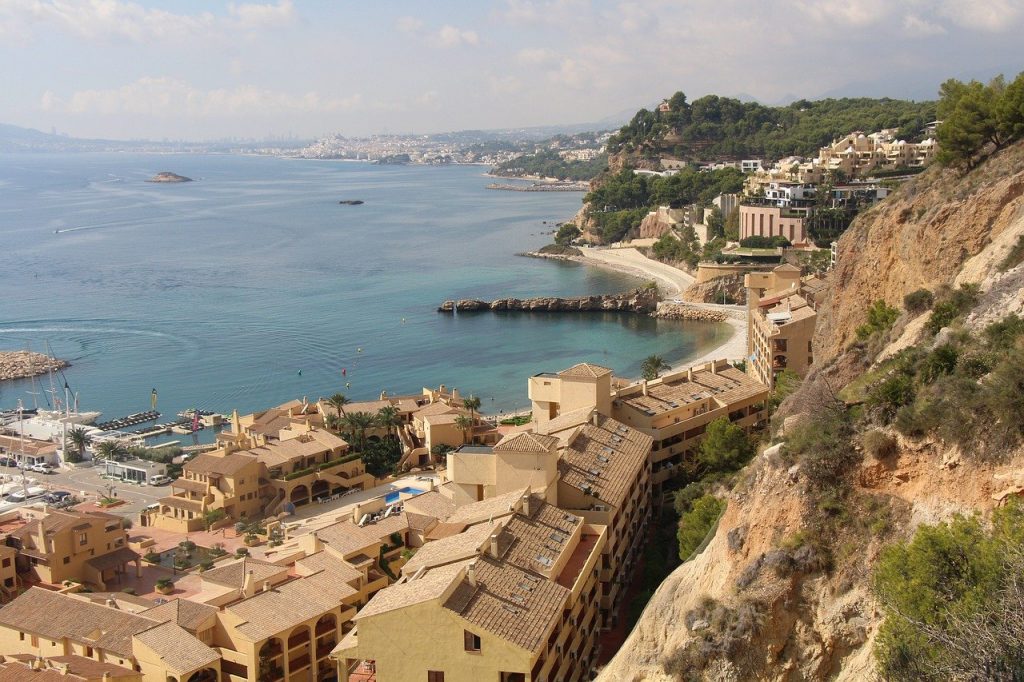
The colls are challenging, the downhills sweeping and the municipal pools scattered throughout the region, in every town and village, very welcome at the end of a hard day in the saddle! Head for the Sierra Mariola, near Alcoy, for some of the best routes in the region. The hiking in this area is also pretty outstanding.
Top Road Cycling Tip – stop at one of the many bars and family run restaurants in the villages en-route and sample traditional local cuisine such as paella or simple, but delicious tapas of jamon, local olives and cheese.
Water Sports in Spain
Whatever your level of expertise or chosen activity, there’s something for everyone in Spain. From the kite-surfing paradise of Tarifa to the jet skiing and speed boating hotspots of the Spanish islands, the seas surrounding Spain offer the perfect opportunity.
Head for the Cabo de Gata National Park for un-disturbed crystal clear turquoise sea water, teeming with life. In summer, kayaking and paddle boring round the caves and weird and wonderful rock formations around Escullos is great fun. Try an inflatable kayak or SUP board and take to the gentle seas for excursions into hidden caves and coves. For an afternoon on the beach or splashing in the shallows head a few kilometers south to one of the best, and most unspoilt beaches in Spain, Playa de los Genoveses.

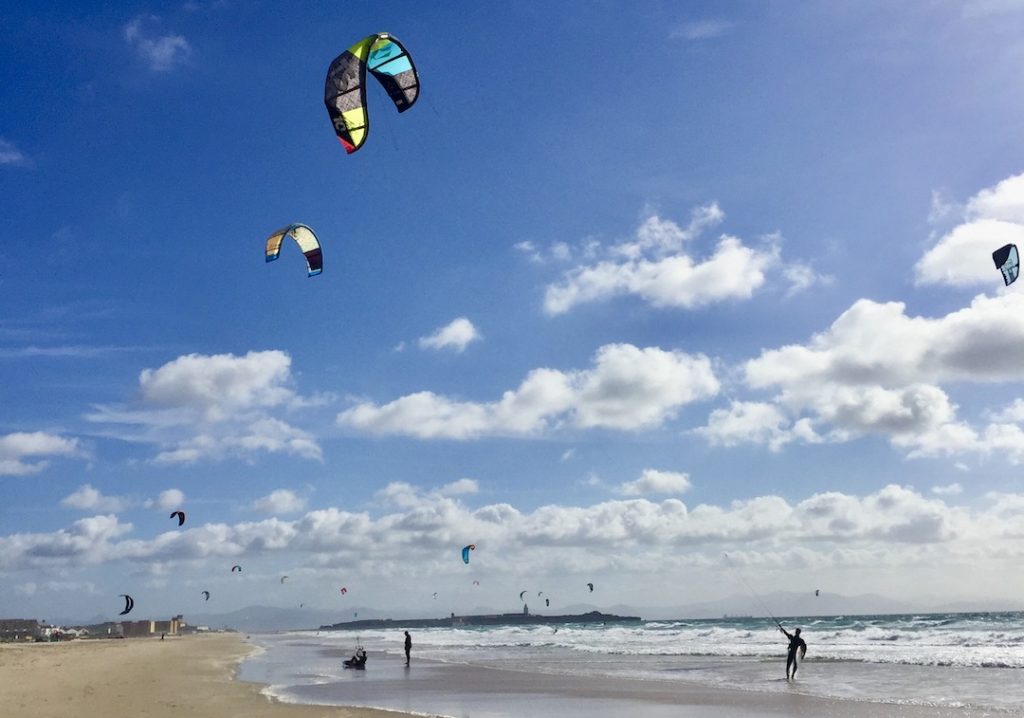
Tarifa is a mecca for all things wind; kite-surfing and wind-surfing being two of the most popular activities. The fabulous Atlantic beaches in Tarfia offer the ideal locations for both sports, with clean wind and lots of options to take advantage of wind direction. As well as being a stunning autumn destination, this is also the best time to learn to kite-surf in Tarifa. There are literally hundreds of kite-schools in the town, lining the beaches and providing lessons and equipment.
In Murcia, the Mar Menor lagoon at La Manga offers a gentler experience across flat water, with the option of sea kite-surfing once you’ve mastered the lagoon!
If white water rafting and kayaking are your thing, then head for the north of Spain, to the Riu Noguera Pallaresa in the heart of the Catalan Pyrenees. This raging and wild river will give you all the thrills you want! With over 50km of clear white water and up to level IV rapids, this river is suitable for all levels and will get your adrenaline pumping like nothing else.
If you’re brave enough, you can also try canyoning and hydrospeed, a sport that involves hurtling yourself into fast-flowing white water and being carried along at high speed while buoyed up by a float…yep, I said you needed to be brave!
Unless you’re an expert, all these water sports are best done as part of a guided tour or holiday experience, where guides will be trained and certified and you’ll be provided with the right types of safety equipment.
Top Water Sports Tip – make sure you wear sunscreen and a hat and stay hydrated…you can be fooled by the cool of the water and forget how hot the Spanish sun can be.
Wrapping Up
Overall, we hope that you found helpful this guide highlighting Spain off the beaten path + the best outdoor activities in Spain. We know that you will enjoy exploring the magic of Spain. Safe Travels!
This is a guest post by Izzy and Phil from the blog The Gap Decaders.
Author’s Bio: Izzy and Phil are The Gap Decaders. A travel couple who sold their house and quit their jobs to road trip and live in a motorhome in Europe. You can also follow them on Facebook and Pinterest.
Enjoyed Reading? Save it for later on Pinterest!