
Día de los Muertos is a highly significant and celebrated holiday in Mexico, where families and communities gather to honor and remember loved ones who have passed away.
This holiday takes place on November 1st and 2nd and during this time, families create altars or ofrendas at their homes or gravesites to honor their deceased loved ones.
These altars are often adorned with flowers, candles, photographs, and offerings of food and drink. It is believed that the spirits of the deceased return to the world of the living during this time, and the ofrendas are meant to welcome and nourish them.

Day of the Dead is a significant cultural tradition in Mexico, and it has been recognized as a UNESCO Intangible Cultural Heritage of Humanity.
The holiday is also marked by parades and processions, where people dress up in colorful costumes and skull makeup, and even though the gist is similar everywhere you go, each place has its own way of celebrating the date.
Here are a few unique ways in which Day of the Dead is celebrated throughout the country!
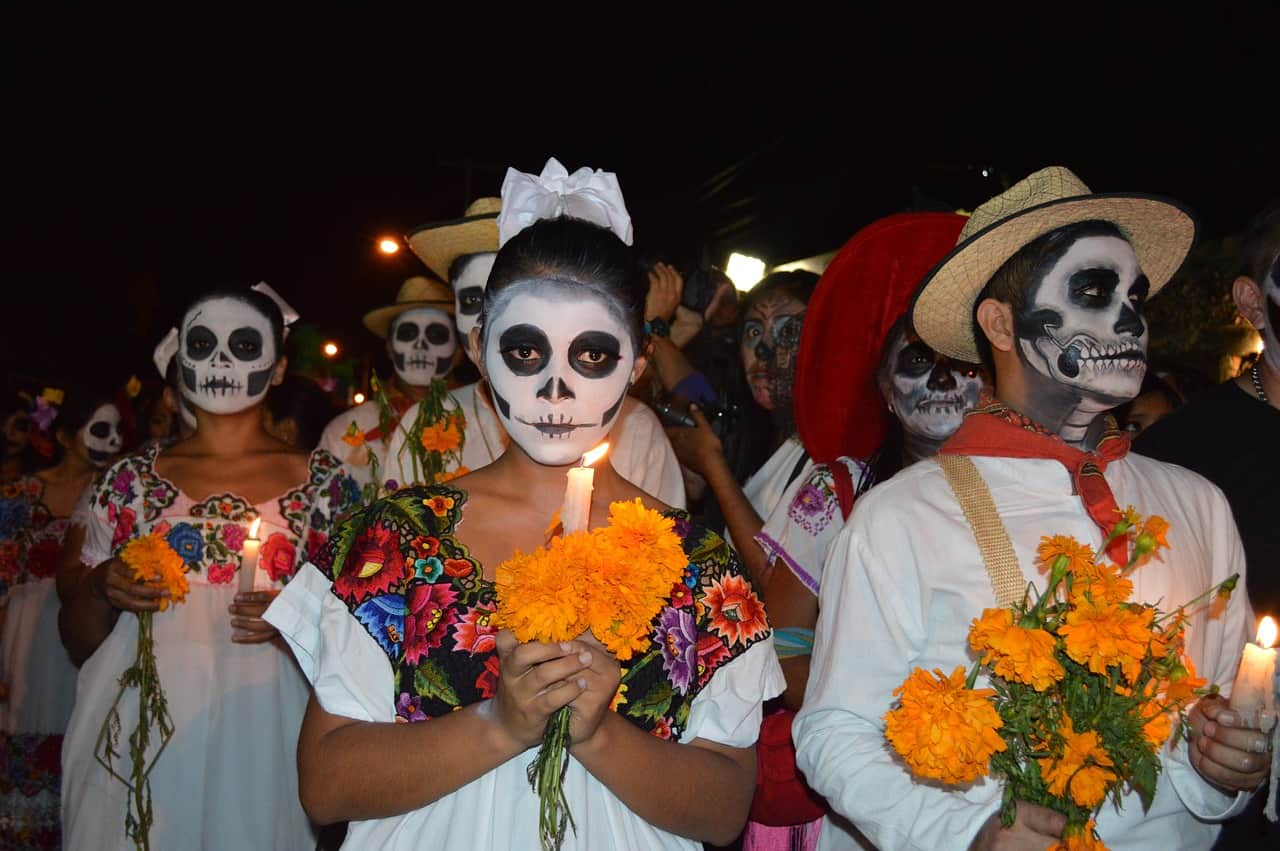
Best Day of the Dead Celebrations in Mexico 2023
1. The Grand Parade in Mexico City
Day of the Dead in Mexico City is a vibrant and exciting affair. With its rich history and cultural traditions, you’ll find plenty of events and activities during this time of year.
One of the most popular things to do in Mexico City during Day of the Dead is the Grand parade. The parade features elaborate floats, costumes, and performances, and is a must-see for anyone visiting the city during this time.
Funnily enough, the parade wasn’t really a thing a few years ago and the city only started embracing Day of the Dead after that famous scene from James Bond!

The parade was actually designed to look just like the one in the movie, and even though it’s a more modern twist to Day of the Dead, it has definitely become a huge tradition in Mexico City ever since.
Aside from the parade, there are many other events and activities taking place throughout the city. My top recommendations include seeing the Llorona play in Xochimilco (you get to see it while floating on boats over the canals!), checking out the many art galleries that pop up everywhere with Day of the Dead-inspired art (Skulls and Art is a great one), and attending the Festival Chaman in Teotihuacan.
YOU MIGHT ALSO LIKE THIS: The Best Day Trips from Mexico City

Photo by Fili Santillán on Unsplash
2. La Alumbrada in Mixquic
If what you’re after is to experience Day of the Dead in a slightly more “traditional” way but still stay close to Mexico City, you should definitely check out La Alumbrada in Mixquic!
The small pueblo of San Andrés Míxquic is located just south of Mexico City and it’s a wonderful place to experience Day of the Dead. Starting on October 31st, the neighborhood gets blanketed by colorful altars and offerings, but the best time to visit is on the night of November 2nd, when the cemetery gets covered with candles, flowers, and treats, and the “Alumbrada” takes place.
La Alumbrada is an event where all the electricity in Mixquic is turned off, leaving only the light of candles to illuminate the streets and cemeteries. This is done in order to clear the path so the dead can find their way to meet the living.
During the night, visitors can walk around the neighborhood’s cobblestone streets, observe the colorful ofrendas, indulge in traditional Day of the Dead food, and enjoy live entertainment and performances, including live mariachi music.
3. Hanal Pixán, Yucatan
If you want to visit somewhere warmer and have easy access to the beach while still getting to experience Day of the Dead in a unique way, the state of Yucatan is a wonderful choice!
Hanal Pixán is Mayan ritual that pays tribute to the deceased and involves setting up altars at homes and cemeteries. Similarly to other places in Mexico, altar offerings include food, drinks, and gifts to the departed, but the food is quite different than what you’ll find elsewhere.
The tradition includes several rituals, but the main one consists of setting up a table that serves as an altar. In fact, Hanal Pixán translates into “food for the souls”, making it a really great spot for foodies! Most tables are usually lit with wax candles and set under trees or near the graves of the deceased.
Food you’ll find here include mucbipollos, x’pelón tamales, balché (an alcoholic drink made with the bark of a tree), tan-chucuá , and more! Aside from the main event, you will also be able to taste the food at different food festivals that pop up around various towns and cities all over Yucatan.
If you were to ask me, the best place to set up a base to experience Hanal Pixán in Yucatan is Merida. Aside from the ceremony, the city also hosts a variety of other Day of the Dead events, including a parade through the city center, live music and dance performances, and a traditional market where you can purchase handmade crafts.
4. Kuirisi-atakua, Michoacán
Even though the Kuirisi-atakua traditions are slowly disappearing, you’ll still find them in several small villages in Michoacán, including Uranden, Ihuatzio, Tzitzuntzan, Jaracuaro, Tzurumutaro, and the famous Janitzio Island (Kuirisi-atakua actually marks the start of Day of the Dead on the island!).
This tradition started out decades ago on the shores of Lake Patzcuaro. Locals head out to hunt ducks on October 31st in order to prepare for Day of the Dead. They capture them with reed spears or nets and offered them as a tribute to the deceased and as food for the living.
Even if you don’t get to partake in the chase, simply getting to see all the colorful canoes adorning the lake is reason enough to visit Michoacan for Day of the Dead. Plus, Janitzio and Patzcuaro are two of the best places in the country to experience the date in a super authentic way, so you can arrive there in late October and linger a while till November 3rd to experience the whole affair!
Moreover, in many villages in the region, there is also an offering organized by young people in which they “steal” elements needed to create their atlas from farms! This type of “theft” is allowed, and both locals and the authorities are aware of it – they’ll get corn, pumpkins, flowers, and other things they need to create their ofrendas in a really fun way!
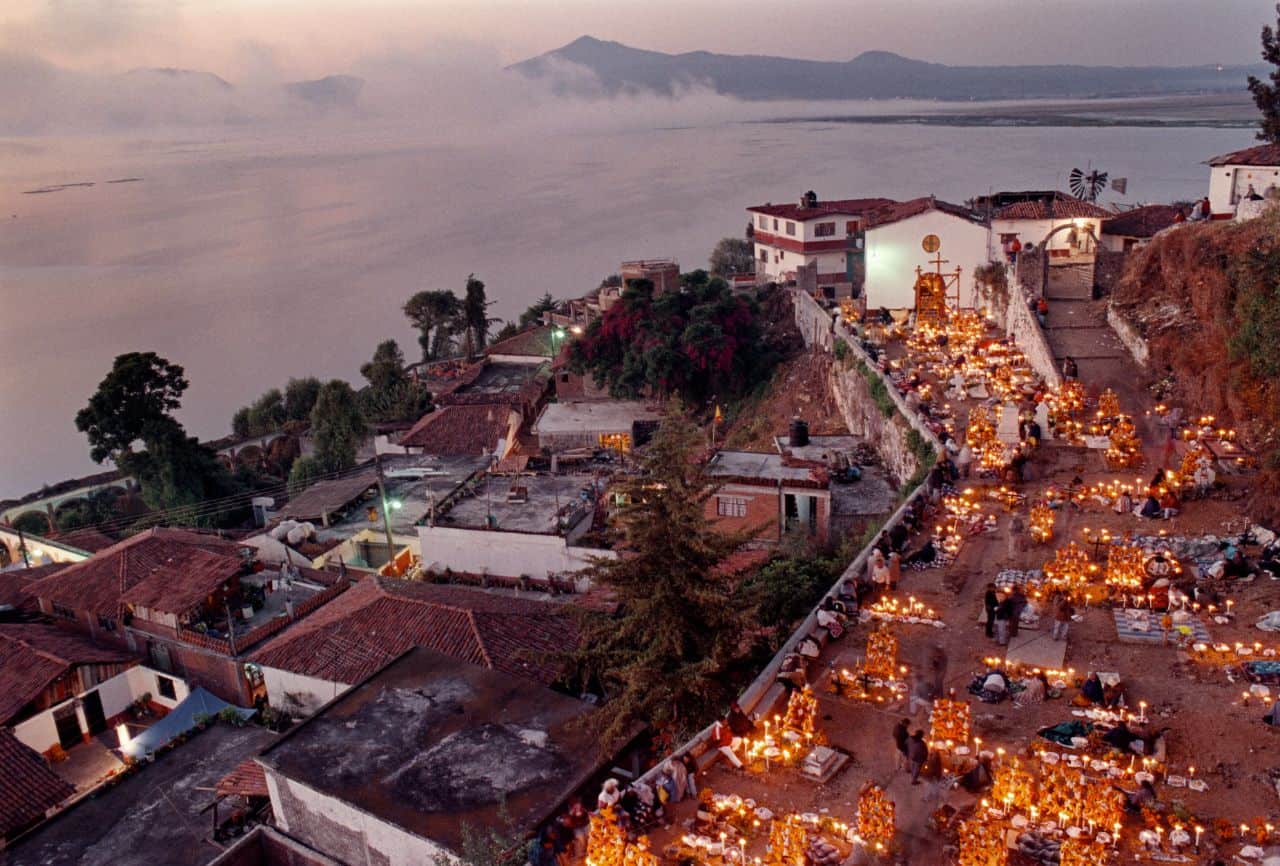
Photo by carlos aranda on Unsplash
5. Tomb Cleaning in Pomuch, Campeche
Pomuch is a small village in the state of Campeche where every year, locals exhume the bones of their ancestors in order to remember them and celebrate Day of the Dead. They’ll take out remains, clean them, place them in a wooden box, and finally take them to an ossuary.
This unique tradition stems from their tradition of remembering their day and keeping them close, so they continue to take care of the bodies of their loved ones even after they’ve passed.
6. Xantolo
Xantolo translates into “party of the souls” from Nahuatl language and is celebrated across the Huasteca region in central Mexico. You’ll find it in several states, including Hidalgo, Veracruz, Tamaulipas, and San Luis Potosi.
Xantolo is nearly 3,000 years old and takes place in cemeteries, public spaces, and squares and it’s a time when people head out to celebrate their dead loved ones with flowers, food, music, and lively dances!
Plenty of towns and villages celebrate Xantolo, but a few of the best spots to head to include Tancanhuitz, Ciudad Valle, San Martín Chalchicuautla, Axtla de Terrazas, and Tamazunchale. Keep in mind that these communities are very small and these places are outside of the usual radar for visitors, so you may just be the only foreigner there!
7. Festival de la Calavera, Aguascalientes
Love catrinas? You need to check out this festival in Guanajuato!
The Festival de Las Calaveras (Skulls Festival) takes place on the Island of San Marcos in Aguascalientes and pays tribute to José Guadalupe Posadas, a draftsman and engraver who spread the image of La Catrina throughout the world.
During the festival, you’ll find a grand parade of skulls as well as plenty of artsy events all over, including plays, workshops, contests, and more. Moreover, you’ll also find amusement park rides, and plenty of delicious food and drink, including traditional sugar skulls and pan de muerto.
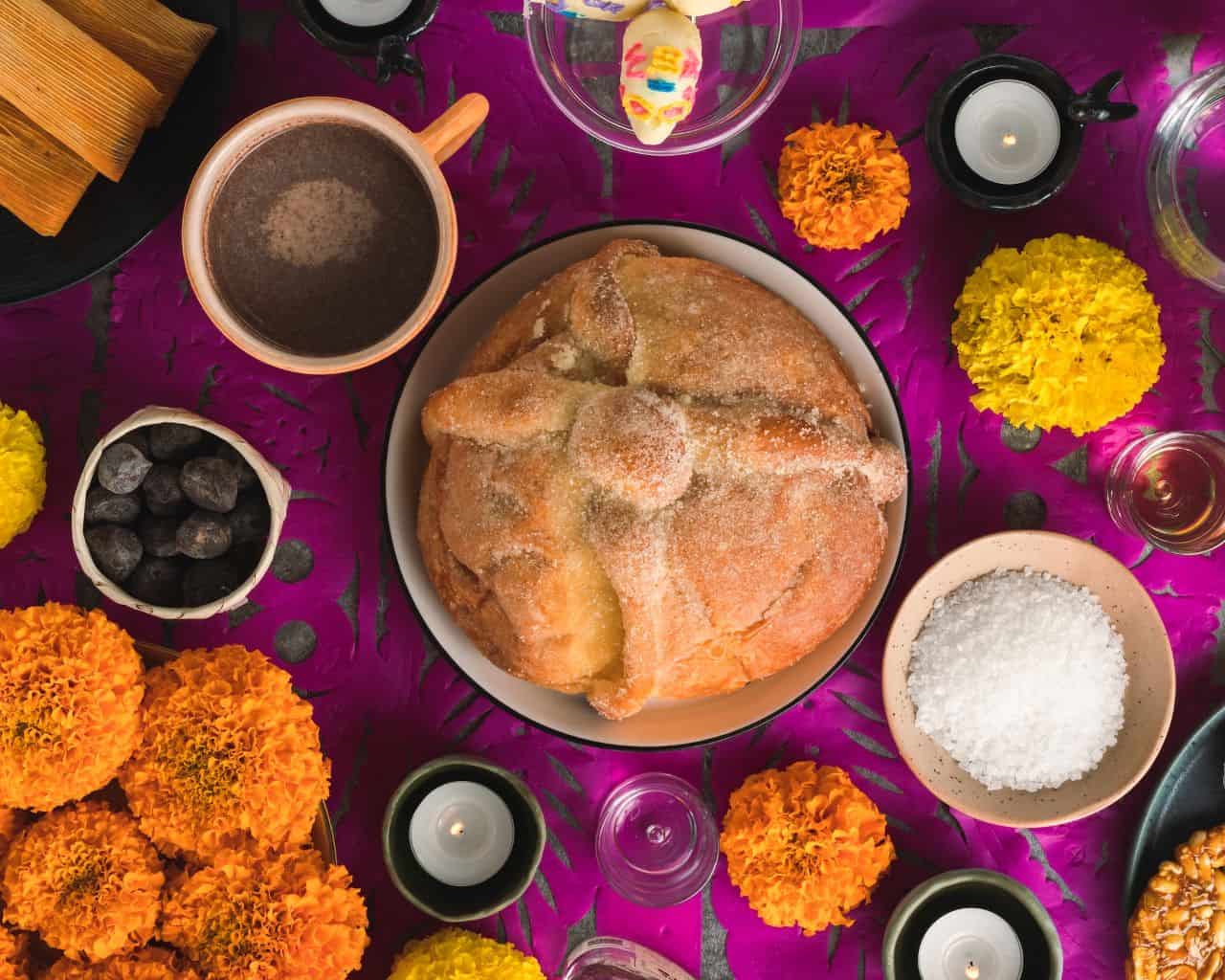
Photo by Gerardo Covarrubias on Unsplash
8. Huehuetones of Oaxaca, Huautla de Jimenez, Oaxaca
The Huehuentones of Oaxaca is a carnival that takes place in the pueblo magico of Huautla de Jiménez, where “chosen” men dress in traditional costumes, wooden masks, and wicker hats in order to sing and dance all over the village’s streets representing the souls that returned to the earth from October 27 to November 2.
This Oaxacan tradition was born as a sort of ritual in order to invoke the dead through a ceremony in the cemetery. Locals would “ask” permission from the deceased to celebrate their dead and bring them back to life by invoking them in the bodies of the masked men.
When the ritual is finished, the Huehuentones play a violin and shout with joy for being chosen as the bearers of the souls from beyond. From then on, the carnival officially starts and becomes a town-wide parade filled with music, entertainment, food, and drinks for seven days straight.
9. Danza de los Diablos (Dance of the Devils), Cuajinicuilapa, Guerrero
This is probably one of the most peculiar ways people in Mexico celebrate Day of the Dead.
Legend has it that if you’re from Cuajinacuilpa, Guerrero and wish for the souls of your loved ones to make it to your altar, you must allow devils to dance in your home and treat them to pozole, fruits, soft drinks, tamales, and liquor.
During this time, you’ll see dancers wearing masks with beards and fringes made of horse tails as well as ragged clothes. Dances are usually preceded by “Diablo Mayor” or “Tenango,” who represents the role of foreman or boss, and the “Minga” or “Bruja,” which is personified by a man who wears clothes considered to be women’s clothing while carrying a doll.
No one knows for sure how or when this tradition was born, but most believe it has roots in traditions from African slaves during the Viceroyalty. The dance is the same as that from a ritual to God Ruja where slaves asked to be freed from the Spanish.
These days, the Dance of the Devils is considered a huge patrimony of African-Mexican culture in the Costa Chica area of Mexico.
10. Xandú, Juchitlán, Oaxaca
The concept of Xandú is very similar to Day of the Dead, but it has a very tropical twist to it!
Unlike Day of the Dead in the rest of Mexico, Xandu is celebrated on October 30th and 31st and it is a time when souls come back to the living world in order to enjoy what they loved doing most when they were alive.
Xanadu altars are usually created using giant palm leaves, colorful flowers, and lots of fruits. They’re usually super colorful and instead of being placed at cemeteries, they’re usually held at homes instead.
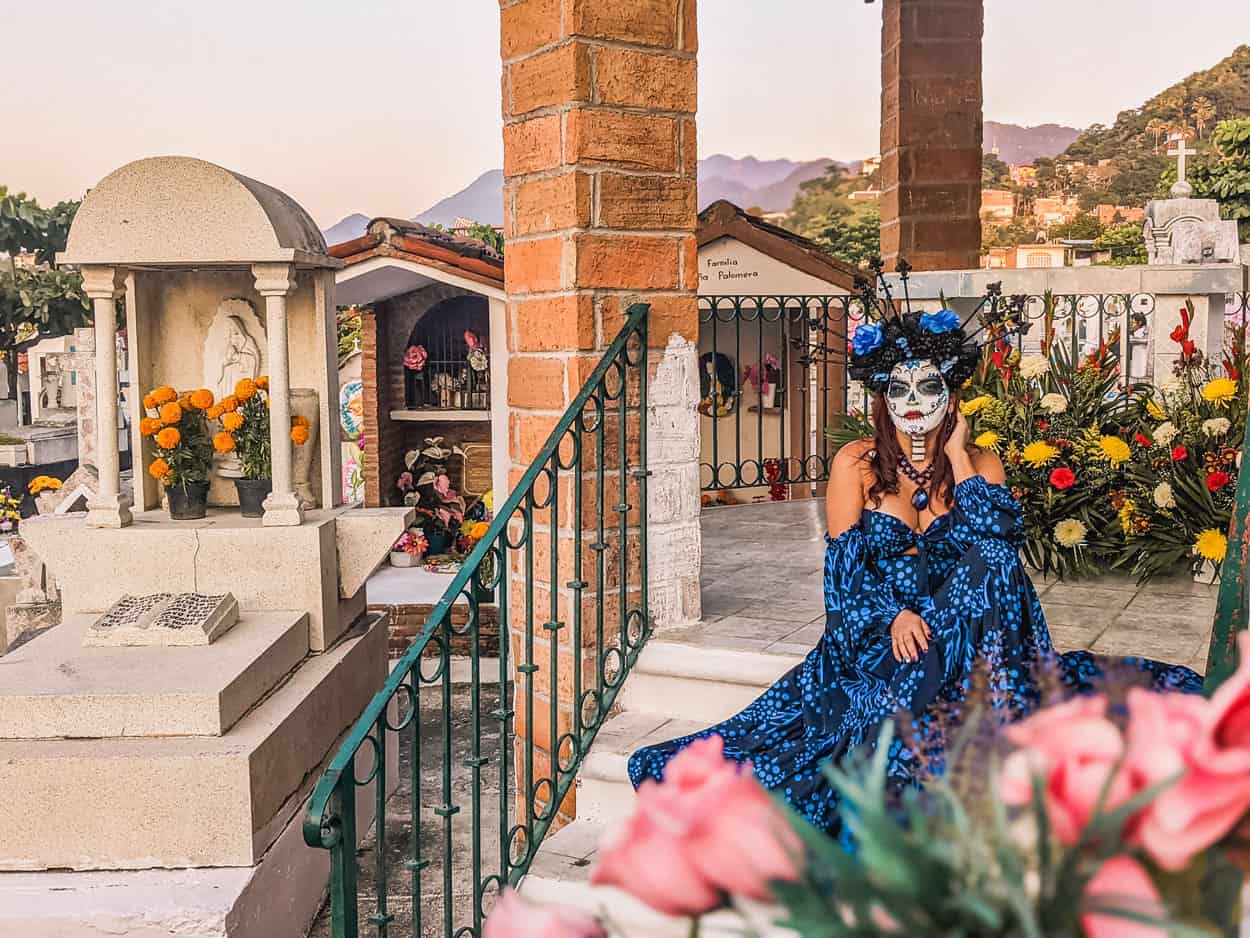
11. Colorful Murals in front of the Cinco de Diciembre Cemetery, Puerto Vallarta
Every year in Puerto Vallarta, artists paint murals depicting Day of the Dead motifs at the Cinco de Diciembre Cemetery.
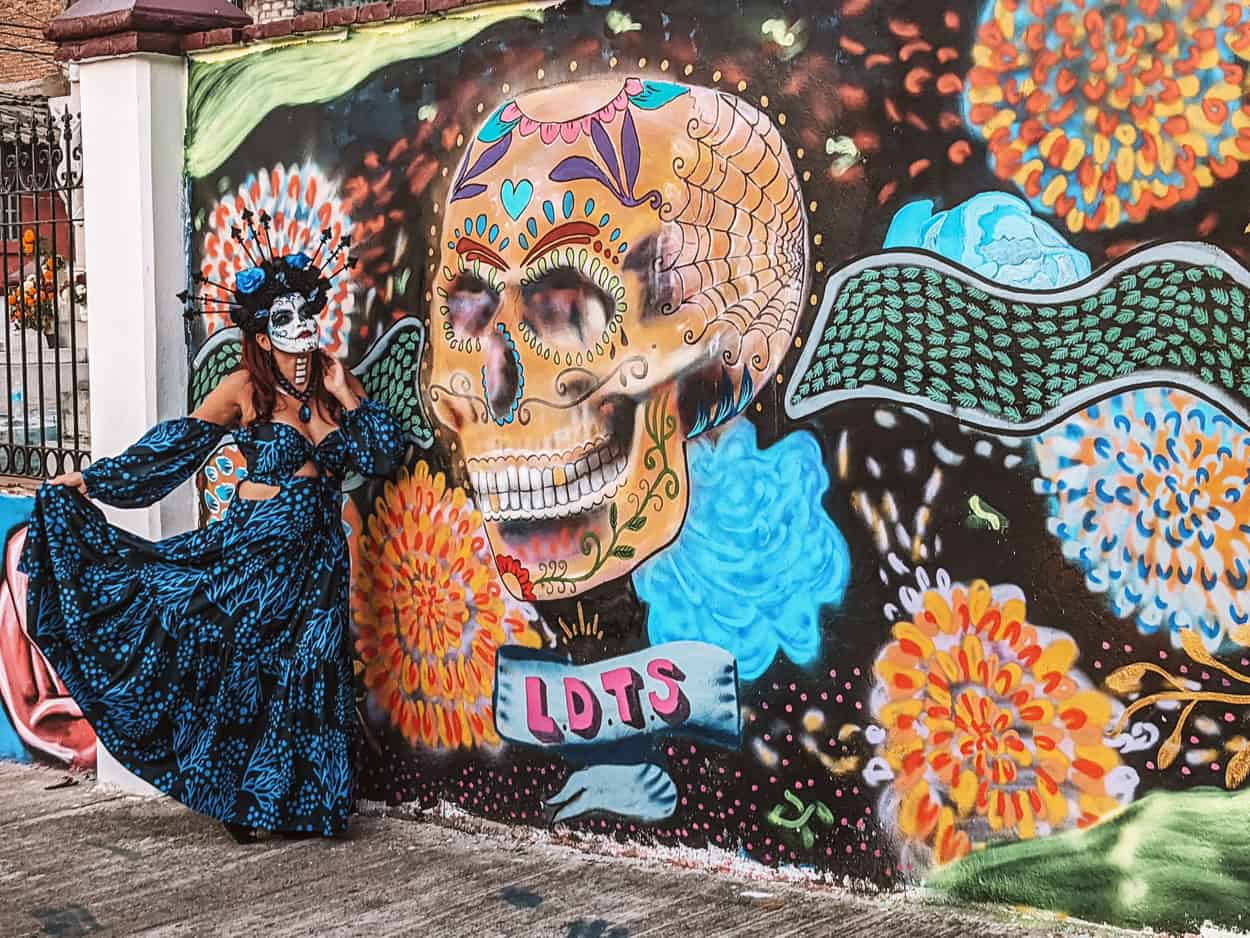
Instead of feeling like a dismal place, this cemetery bursts to life and colors thanks to this tradition. Families gather here to light candles and share stories of those who have passed on the date.
Visitors are generally welcome to pop by and locals are used to that because Puerto Vallarta receives a lot of tourism every year. With that being said, remember that Day of the Dead is an important tradition here and respect is a must since family are paying their respects to family members and some families are more private than others.
Aside from the mural painting, Puerto Vallarta is a great place to observe Day of the Dead. After checking out the cemetery, head over to the Malecon, where you’ll find a gorgeous display of enormous catrinas overlooking the ocean (last year, one of the catrinas in Puerto Vallarta broke the World Guinness Record for the tallest catrina)!


Unique Day of the Dead Celebrations in Mexico: Conclusion

Even though Day of the Dead festivities are guaranteed to be filled with colorful decorations, delicious food, and lively music, every place in Mexico has its own unique way of marking the date!
Whether you’re on the lookout to spend Day of the Dead surrounded by gigantic catrinas in Puerto Vallarta or Mexico City or prefer to head over to a small town where centuries-old traditions have not been forgotten, celebrating Dia de Muertos in Mexico is an experience you won’t soon forget.
This is a post by Guest Contributor Dani Ramos
Author’s Bio: Dani is a travel blogger from Mexico City who traveled full time for 5 years before returning to Mexico. After visiting and living in lots of places, she realized how lucky she is to call Mexico her home.
Enjoy reading? Save it for later on Pinterest!