
The small island of Malta, perfectly located between Africa and the Italian island of Sicily, offers a lot despite its size: It’s home to many historical highlights, including 10 UNESCO World Heritage sites (one even older than Egypt’s pyramids) and stunning natural coastlines and impressive rock formations.
I spent a week in Malta and its little sister island Gozo and was amazed by the island’s diversity. Thanks to its mild climate in winter, Malta is an outstanding destination for outdoor enthusiasts and culture lovers alike, year-round.
In this guide, discover 12 of the best things to do in Malta and Gozo, including cultural and natural sights, two fantastic coastal hikes as well as two hyped attractions, I would not recommend visiting.

Must Visit Places in Malta: 12 of the best things to do in Malta
1. Valletta
Valletta, the smallest capital city in Europe and a UNESCO World Heritage Site is undoubtedly one of the main attractions of the Maltese archipelago. It mixes exciting historical heritage with beautiful architecture and is accordingly popular and always full of tourists.
The 16th century citadel encloses the narrow streets of Valletta’s old town, by a defensive wall of several meters. The Upper Barrakka Gardens are Valletta’s most beautiful lookout point.
From here you can admire the Grand Harbour as well as Vittoriosa, Senglea, and Cospicua, also known as the Three Cities on the opposite side of the harbor basin. By the elevator, you get down from that viewing platform to the ferry, which takes you in 10 minutes across, to the other side of the harbor.
By the way, the best view of Valletta is from Fort St. Angelo at the tip of Vittoriosa, the middle one of the Three Cities.
Within the picturesque alleys of Valletta’s old town, around the magnificent Republic Street, you should simply let yourself wander and explore. For a visit to St. John’s Co-Cathedral, a masterpiece of gold and colored marble, I recommend buying an online ticket in advance so that you do not have to queue in line for ages.
For insights into Malta’s history, you should head to the National War Museum inside Fort St. Elmo. Located at the top of Valletta, the fortress also offers a great view of the harbor entrance.
Interesting, but only if you have time, is the Casa Rocca Piccola. This museum provides information about the life of the historically important de Piro family.

2. Mdina & Rabat
Today, only around 400 people still live in Mdina, the former capital of Malta. The small medieval town is also known as the “Silent City”, as it is car-free. As a Game of Thrones fan, I did directly recognize the main gate, as the gate to Kingslanding in season 1.
The heart of Mdina is the impressive St. Paul’s Cathedral, which is richly decorated on the inside. Various bastions of the city wall offer breathtaking views over the Maltese countryside.
Don’t miss Rabat, which is only 10 walking minutes from Mdina. It is home to some of Malta’s most interesting archaeological sites. St. Paul’s Catacombs, for example, are an underground labyrinth of tombs that offer truly fascinating insights into early Christian life in Malta.

3. Dingli Cliffs
The Dingli Cliffs are located on Malta’s west coast. In many places around the island, the cliffs fall off steeply, but nowhere as high as here. At 253 m, they are the highest elevation on the island.
A wide footpath and a road lead along the cliffs, making it easy to enjoy the limestone cliffs and their beautiful views of the Mediterranean.
Close to the Dingli cliffs is Malta’s only small forest, home to native and migratory birds from Europe in winter.
4. Blue Grotto & Ħaġar Qim Temples
Two more of the main things to see in Malta await south of the Dingl Cliffs. Ħaġar Qim is a temple complex with the remains of 2 temples that were built between 3600 and 2500 BC, nearly 5000 years old!
The visitor center at the entrance offers lots of interesting information about the UNESCO World Heritage Site interactively. There is very little shade and a 600 m walk in the blazing sun between the two excavation sites. I therefore highly recommend wearing a sun hat.
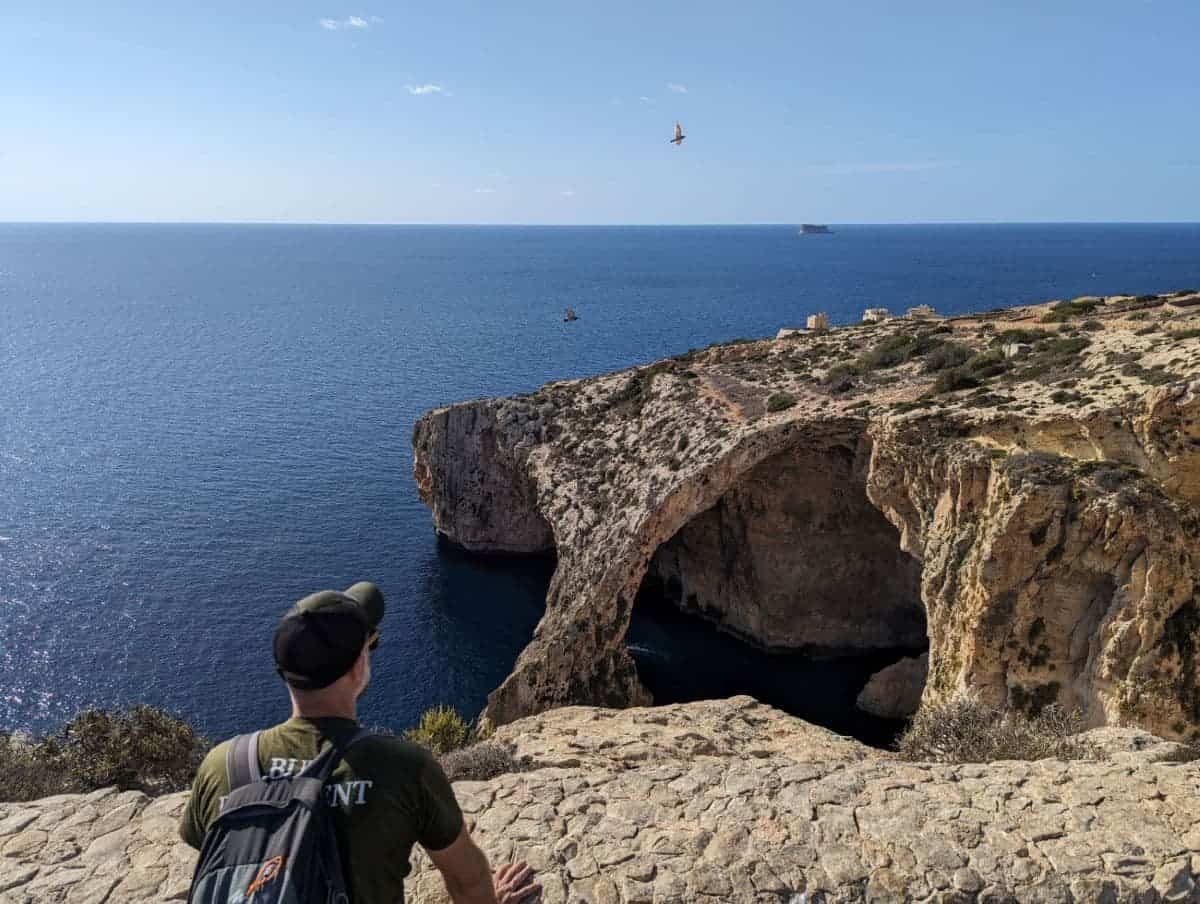
The Blue Grotto is just 2 km to the south of the Ħaġar Qim temples and therefore easy to combine. Do not confuse the Blue Grotto with the Blue Lagoon on the neighboring island of Comino.
A lookout point on the road offers a fantastic view from above of the turquoise-blue water in front of the cave entrances. The visit to the Blue Grotto consists of a 30-minute boat tour.
The short excursion is nice, but if you are planning a visit to the Blue Lagoon, these € 10.00 per person may be better spent somewhere else.
5.Marsaxlokk – Marsaskala Hike
A wonderful hike that combines several Malta highlights leads from Marsaxlokk, a traditional fishing village, along the beautiful cliffs, to Marsaskala, in the south-east of the Malta island. The port of Marsaxlokk is well known for its colorful and traditional fishing boats.
A signposted 30-minute path leads to St. Peter’s Pool. This natural pool has clear turquoise-green water and is surrounded by a beautiful horseshoe-shaped rocky bay. Perfect for a swim.
Hiking trails lead along the impressive cliffs of almost white limestone rocks, unfortunately without any signposting, all the way to the village of Marsaskala. I recommend the quiet St. Thomas Bay as another swimming stop along the way.
Here, ladders help you over the rocks into the crystal-clear water. Before you reach the lively little town of Marsaskala after about 10 km, you will pass some interesting salt pans that are no longer used for salt production. You can easily return to Marsaxlokk or Valletta by bus.

6. Blue Lagoon on Comino
One of Malta’s most popular sights is the Blue Lagoon. It is located on the small island of Comino, which lies between the larger sister islands of Malta and Gozo. You will either love or hate that excursion.
The bay is truly spectacular, in a gorgeous turquoise blue, but the crowds are equally large. Here you can swim, snorkel, dive, relax, or do other water sports.
If you decide to take a trip to the Blue Lagoon, I recommend visiting in the early morning or late afternoon to avoid the crowds.

7. Victoria
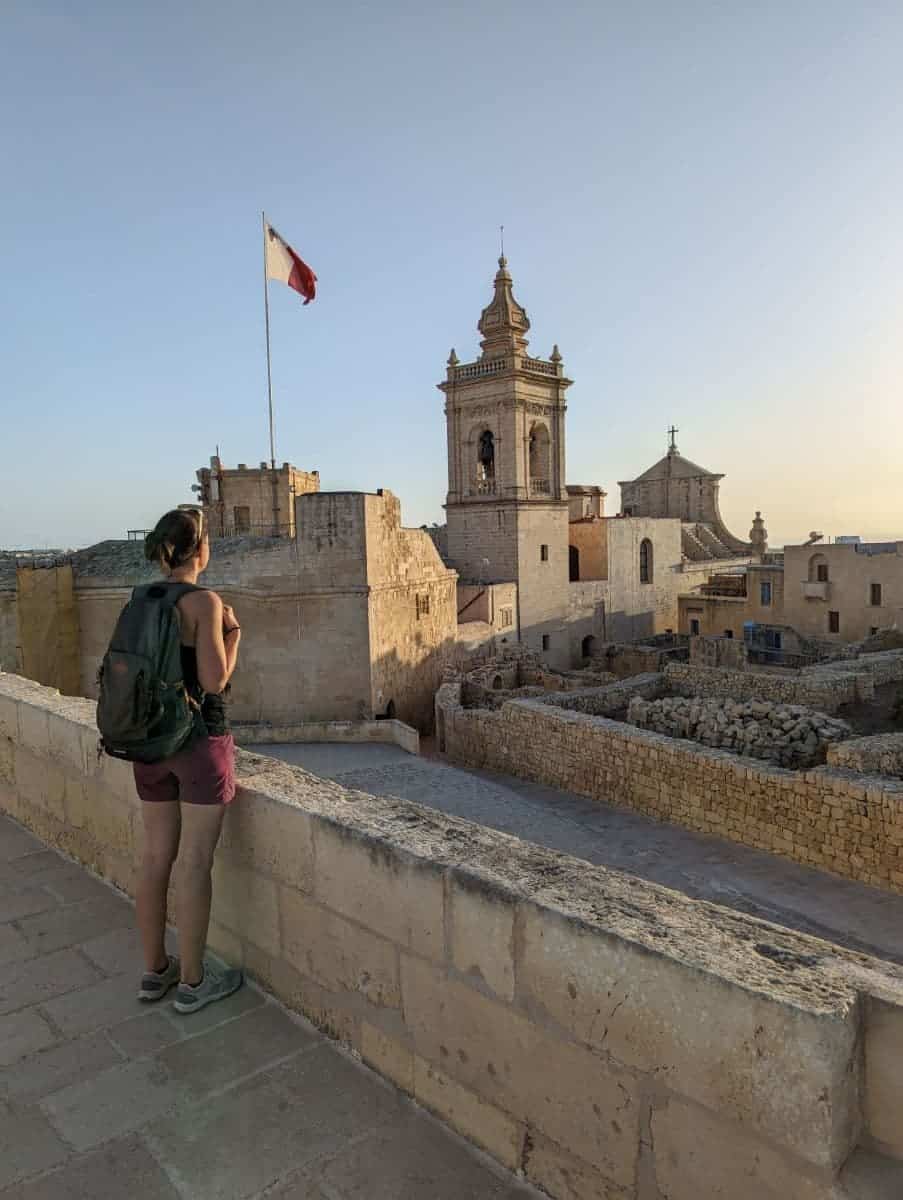
Victoria is the capital of Malta’s sister island Gozo and for me the most beautiful city in the Maltese archipelago. The main attraction is the impressive military-style citadel. It is a Gozo landmark that can be seen across the entire island.
From the fortress walls, you have a fantastic 360-degree view that stretches all the way to Malta. Its winding streets hide historical and religious sites such as the baroque cathedral, the former courthouse, and the bishop’s palace.
Don’t miss the narrow old town streets outside the citadel. Here you can experience the authentic flair of the island and taste some excellent traditional Maltese food in the small restaurants.
8. Dwejra Bay, Blue Hole & Inland Sea
For divers and snorkelers, the Dwejra Bay, the Blue Hole, and the Inland Sea on Gozo are probably Malta’s number one highlights. These natural treasures are right next to each other and can therefore be perfectly combined.
Until a few years ago, the so-called Azure Window, a huge arch made of natural stone, was the main attraction in Dwejra Bay. Despite its collapse in 2017, the half-moon-shaped bay with the Fundus Rock cliff in its center is still absolutely worth visiting.
Just a few steps north of Dwejra Bay you can swim in the Inland Sea Lagoon, which is only separated from the Mediterranean by an 80-metre narrow tunnel in the rock.
The Blue Hole, also located in Dweja Bay, is a natural dive site. It is about 10 meters wide, 20 meters deep, and surrounded by rocks. About 10 meters below the blue hole surface an underwater arch opens up through which divers can enter the open sea.
The entire coastal area is home to a fascinating underwater landscape, rich in marine life and corals. It is not only the diverse underwater world that makes Gozo (and Malta) so popular with divers.
The islands also offer the possibility to reach almost all dive sites, including some shipwrecks, directly from the shore.

9. Salins de Marsalforn
The salt pans of Marsalforn on Gozo are part of a traditional salt extraction system that has been in operation for centuries. The traditional craft was once an important industry on the island, but today only a few families still work here.
The salt pans are not only historically significant but also an ecologically valuable place that attract a variety of water birds and other creatures.

10. Gozo Northwest Coastal Hike
The two Gozo highlights mentioned above can be perfectly combined in a scenic coastal hike. Start the approx. 10 km long tour with the salt pans of Marsalforn. Just like on the larger sister island, there are unfortunately no hiking signs on Gozo.
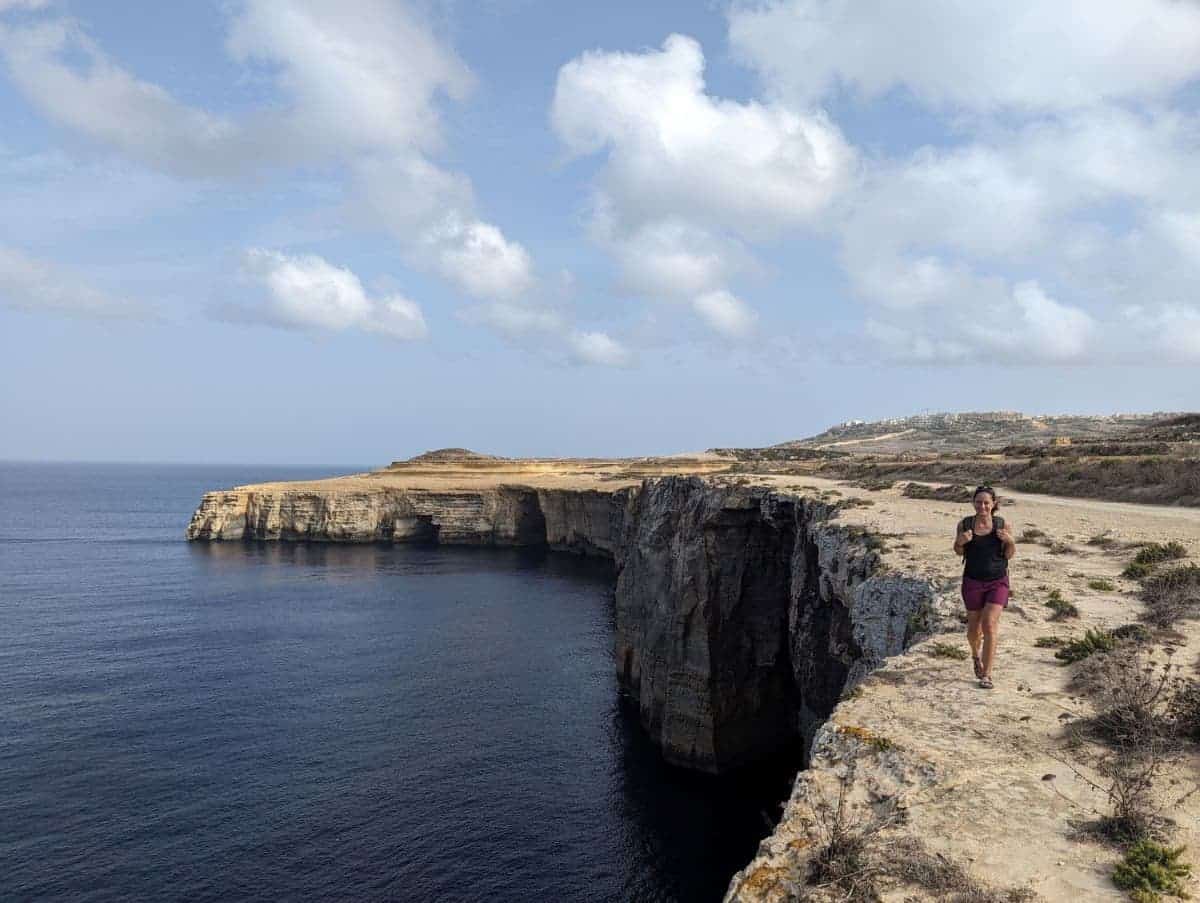
Just keep walking along the cliffs with their stunning views and follow the hiking trails and paths. The panoramic hike also takes you past another spectacular natural limestone fortress (Wied il-Mielaħ) and then ends in the fantastic Dwejra Bay, which is also famous for its sunsets.
11. Ramla Bay & Tal-Mixta Cave
Ramla Bay in the west of Gozo is the only and largest sandy beach on the island. Its color lies somewhere between golden yellow and red: simply beautiful!
The best view of the gorgeous, crescent-shaped beach is from the Tal-Mixta Cave. A steep footpath leads from the beach to the cave which you will reach in a 20 minutes walk.

12. Malta and Gozo churches
Malta and Gozo are said to have 365 churches and chapels, one for every day of the year, according to the locals. Do not be surprised, but for some of them, you will have to pay an entrance fee.
Even if you’re not a fan of churches, there are three that are really worth seeing, in addition to the St. John’s Co-Cathedral in Valletta.
The Rotonda of Mosta is impressive inside and out. For €5.00, you can climb up into the dome and look down into the round-shaped church. Included in the price is an interesting Second World War bunker located on the forecourt.
St. John’s Basilica or Rotunda of Xewkija is the largest church on the island of Gozo and the third-highest self-supporting dome in the world. It is 75 meters high with a weight of 45,000 tons and is supported by 8 large columns.
For a donation of €3.00, you can take the elevator to a viewing terrace (not in the tower) and admire Gozo from above.
The Ta’ Pinu Basilica is absolutely stunning from the outside, but it is not really necessary to see from the inside.
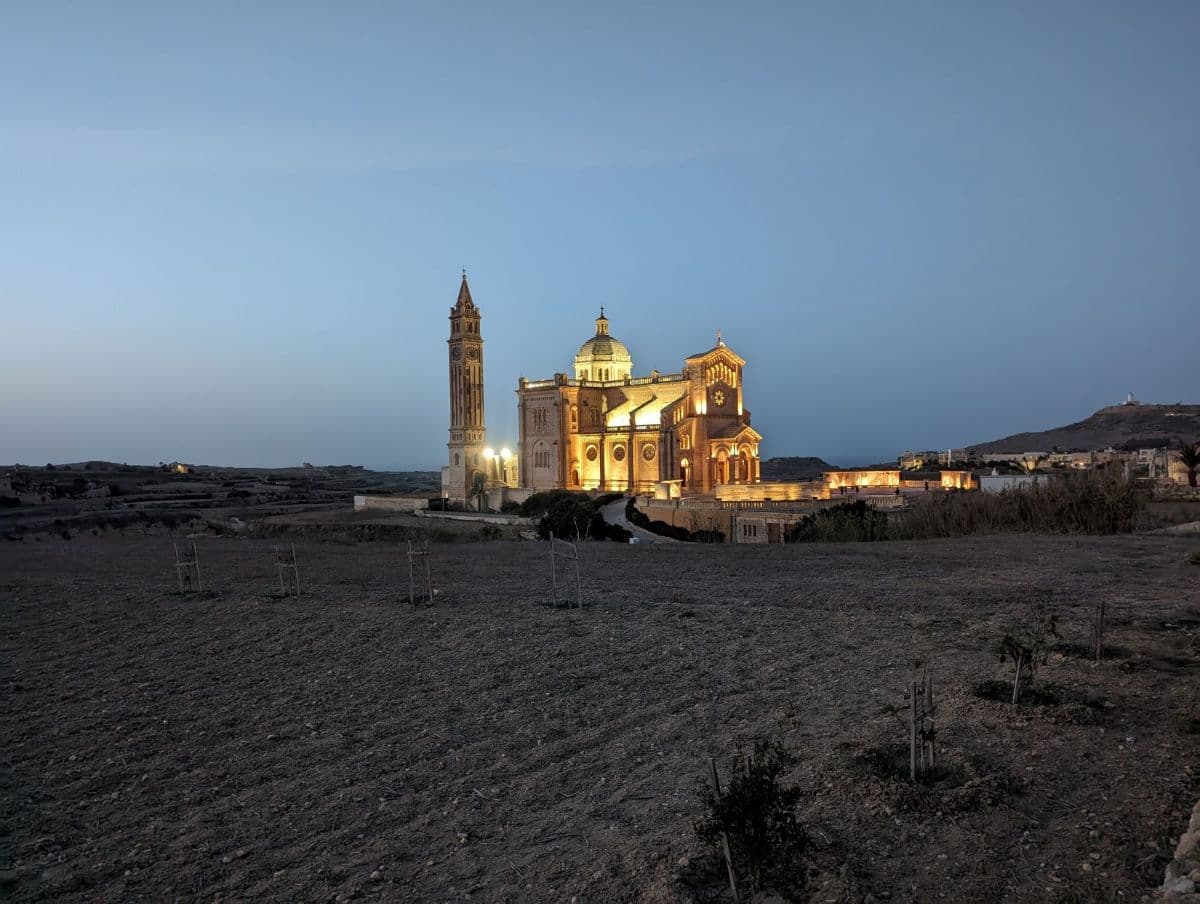
The important pilgrimage church stands in the middle of nowhere and is beautifully illuminated in the evening! Even Pope John Paul II and Benedict XVI have been praying here.
Things you do not need to see and do in Malta
There are two Malta sites that are very hyped that I can’t necessarily recommend. On the one hand, there is the original film set of the movie Popeye starring Robin Williams.
This tourist attraction is hopelessly overcrowded and more like a large theme park and also quite expensive.
My tip: In the south of Anchor Bay, opposite the former movie set, you can look at the Popeye Village from a little further away but for free. A nice place for a swim and to enjoy a scenic sunset in the evening.
The Malta National Aquarium is also often mentioned as a highlight of the island. The aquarium, which is not particularly large, is nice and certainly a great adventure for children, but not a sight that I would recommend if you only have a week for all the things to see in Malta.
Even if you visit Malta in winter, the island has so many more interesting and beautiful places and activities to offer.

How to get to and around Malta
Malta is served by direct flights from most major European cities. More frequently in summer than in winter. Road traffic in Malta is Italian-style and also left-hand traffic.
Therefore, you may want to think about using public buses instead of booking a rental car and throw yourself into the chaos. With the Explore Card, you can travel as much as you want by bus for € 21.00 for 7 days on all islands.
There are no bridges between the islands (Malta, Gozo, and Comino) but there is a well-developed ferry service, which runs several times an hour at a very reasonable price.

Where to stay in Malta
I would decide on where to stay depending on how you want to explore the islands. If you want to get to know Malta and Gozo by bus, you should book accommodation in the main towns of Valletta and Victoria, as all island buses start and leave from there.
If you prefer to travel by rental car, you should avoid these cities and stay in small villages. Especially around Valletta, there are always traffic jams, no matter what time of day and I strongly recommend visiting that city by bus even if you choose to have a rental car.
Booking.comThis is a post by Guest Contributor Linda
Author’s Bio: Linda is the founder of the travel and hiking blog Hiking the Alps. On her blog, you will find detailed hiking routes, interesting outdoor topics, information on the most beautiful destinations, and lots of inspiration for your next vacation in the European Alps and the associated Mediterranean islands.